Lot No. LOT-6968 · offered September 30, 2026
Precision Agriculture & AgTechLot sheet
Data-Driven Farming Cuts Inputs Up to 30 Percent — If Connections Hold
Precision agriculture can trim water, fertilizer and chemical inputs by 15-30 percent, but only if rugged connectors keep cameras and sensors transmitting in mud, dust and vibration.
Market notes
- Studies cited by TE Connectivity show data-driven systems reduce water, fertilizer and chemical inputs by 15-30% while maintaining or improving yield.
- Advanced precision-agriculture equipment costs range from tens of thousands of dollars to half a million or more depending on farm size and application.
- TE developed a fully sealed connector system for a customer running more than 30 cameras on one sprayer after exposure to water, pesticide and mud blurred images.
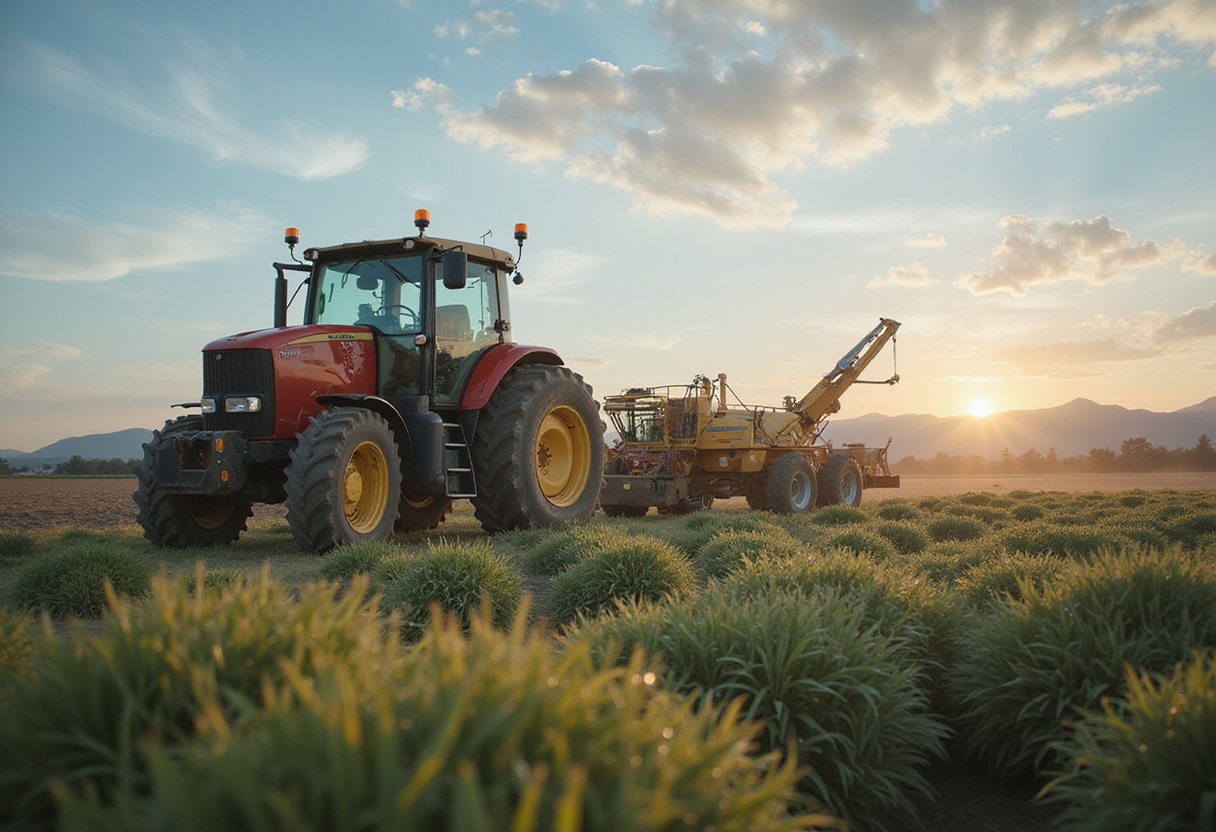
Data-driven farming systems can cut water, fertilizer and chemical use by 15 to 30 percent while holding or improving yield, according to industry studies cited by TE Connectivity. But the entire value chain, from variable-rate seeding to targeted spraying, rests on one unglamorous component: connectors that survive mud, pesticide, vibration and dust.
Precision agriculture has moved beyond early adopters and large-scale operations to become an expectation across farm sizes and regions, writes TE product manager Jennifer Love in an article for SAE Media Group dated June 18, 2026. Farmers face pressure on multiple fronts — reducing labor, trimming chemical inputs, conserving water and operating inside narrow seasonal windows — while global food demand and environmental scrutiny push the same direction.
The agronomic logic is straightforward. Soil composition, nutrient availability, moisture and pest pressure can vary within a single field. Traditional whole-field management wasted inputs on areas that did not need them and risked crop loss where treatment came too late. Variable-rate seeding, targeted spraying and yield mapping let operators treat only the zones that require attention.
The connector problem
The weak link proved to be hardware. OEMs originally had no choice but to fit automotive connectors on off-highway equipment, and the field quickly exposed their limits. Vibration, extreme temperatures, moisture and dust-laden air degraded performance until purpose-built off-highway connectivity products entered the market.
TE's DT highspeed sealed connectors now carry Ethernet channels from 100 Mbps to 1 Gbps under the IEEE 802.3bp multi-gigabit protocol for commercial and industrial vehicles. Its enetSEAL+ line handles wire-to-wire and wire-to-board connections for multifunction displays, telematics, telemetry units, infotainment modules and ADAS, and links external cameras and sensing modules over single-pair Ethernet.
One real-world case illustrates the margin impact. A TE customer ran more than 30 cameras on a single sprayer for nozzle-level weed identification — a setup that triggers targeted applications instead of blanket spraying. The images came back blurry because the connectors could not withstand water, pesticide and mud. TE engineers developed a fully sealed connector system, restoring image clarity and with it the decision-making capability the customer had paid for.
Downtime economics
Agricultural machinery carries a high capital cost, and an out-of-service machine can lose an operator thousands of dollars per day. Embedded sensors now track vibration, temperature and performance continuously, flagging failure patterns before breakdowns occur during planting or harvest windows. Operators can shift service to off-peak periods, extending machinery life and improving return on investment. Remote monitoring also cuts worker exposure to hazardous chemicals and heavy machinery.
Adoption barriers remain
The barriers are not trivial. Advanced equipment runs from tens of thousands of dollars to half a million or more depending on farm size and application. Integrating multiple systems and managing large data volumes adds technical complexity. Rural network infrastructure remains limited or inconsistent, and operators — experts in their land and crops — need time to learn the technology.
TE expects precision agriculture to become mainstream over the next three to five years, with increasingly scalable solutions reaching both small and large operations and tighter system integration improving productivity, sustainability and worker safety.
via res.cloudinary.com (Original)
More from Nathan Brooks
Show full bio
Staff writer covering marketplaces and e-commerce at Agribusiness Wire.
172 articles
Also in the yard
- European Startups Push Precision Agriculture Into the Mainstream
- USDA Moves to Build Digital Infrastructure for Precision Ag
- Precision Agriculture Tools Emerge as Answer to Fertilizer Shortages
- Precision Agriculture Is Fueling Demand for Farm Service Technicians
- Precision Data Aims to Link Soil Health Metrics to Crop Budgets