Lot No. LOT-5909 · offered November 5, 2026
Commodity MarketsLot sheet
Corn correction and harvest pace shape winter price outlook
Corn prices are about $1 per bushel below recent highs as fund selling weighs on the market. A 17-year pattern and field yield reports point to rangebound trading until harvest reaches 80%.
Market notes
- Corn is about $1 per bushel below its highs amid heavy fund selling.
- A rally may remain difficult until at least 80% of the corn crop is harvested.
- From 2010 across 17 observed years, March corn rallied in six November-December periods; the average rally was 30 cents.
- Across 11 non-rally years, the average decline was 15 cents, and no decline exceeded 40 cents.
- The USDA revised its September corn estimate but left October numbers unchanged; field reports point to a final yield above 180.
By Grace Kim
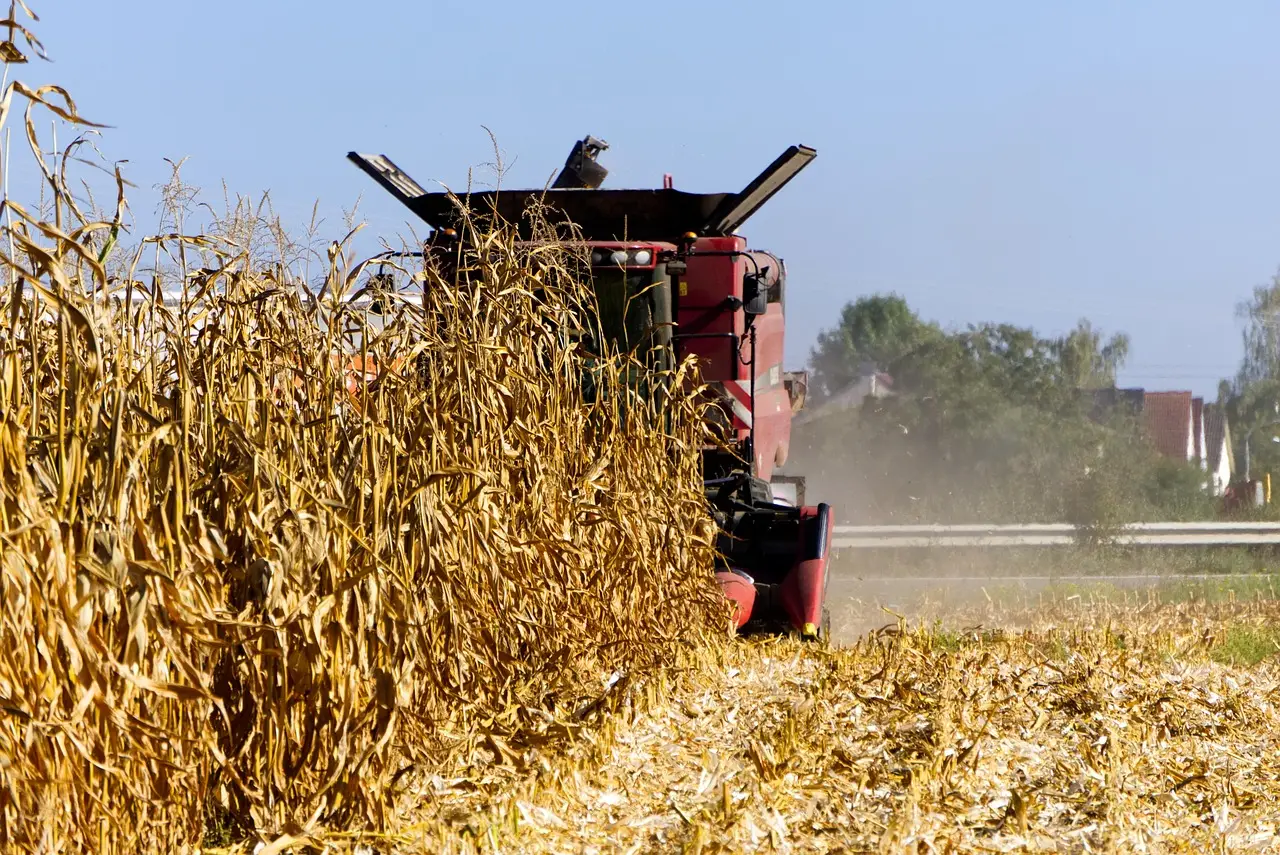
Corn prices are about $1 per bushel below their highs, with heavy fund selling driving much of the decline as harvest remains underway. Grain merchandiser Jon Scheve said prices also remain below his expectations, but he sees a rally as difficult until at least 80% of the crop is harvested.
Upcoming ARC/PLC and diesel-relief payments should help farmers’ cash flow while they wait to see whether a post-harvest rally develops. Those payments may ease pressure from lower crop revenue and fuel costs, although the source does not quantify either offset.
What changed in the USDA corn estimates?
Scheve argues that the USDA’s correction to its September corn estimate strengthens, rather than damages, the agency’s credibility because the agency acknowledged a miscalculation and corrected it promptly. The revision may pressure corn producers this time, he said, although a future correction could just as easily support prices.
The change applied only to the September report; the USDA left its October numbers unchanged. “Much of this information was already reflected in the market,” Scheve wrote, pointing to the unchanged October figures as evidence that traders had absorbed much of the information.
The column does not state the size of the correction, revised production tonnage, acreage, yield or survey dates. Its figures therefore cannot quantify the revision’s supply effect. The USDA estimates and field reports also remain distinct from final harvested results.
What does the 17-year price record show?
From 2010, Scheve’s review of March corn prices from the beginning of November through the end of December found rallies in six of 17 years.
- Three of those six rallies occurred in the last six years.
- The average rally was 30 cents.
- The smallest rally was 11 cents, recorded twice; the largest was 78 cents.
- In the 11 years without a rally, the average decrease was 15 cents.
- No decrease exceeded 40 cents, and four of those years had decreases of less than 7 cents.
The historical sample shows how often the November-to-December move favored sellers, but it does not establish the size or timing of the next move. The source gives no sampling method or calculation details for the price series, so investors should treat the counts as a historical reference rather than a forecast.
Where do yield reports leave prices?
“It will come down to what the yields are,” Scheve said. Most field reports he receives from across the country point to an average yield and, in his view, a final yield above 180, though the column does not specify a yield unit. He expects that outcome to keep corn prices rangebound for the time being.
Those are field reports collected during harvest, not completed yield tallies. Until harvest reaches the 80% threshold and final results are available, the yield case remains provisional, despite the national scope of Scheve’s contacts.
Lower corn prices reduce receipts per bushel, while upcoming ARC/PLC and diesel-relief payments could support cash flow. The source supplies no crop-cost, basis or farm-margin figures, so it cannot show how much those payments would offset lower revenue or what basis opportunities farmers may have.
Who is Jon Scheve?
Scheve grew up raising corn and soybeans on a farm near Beatrice, Nebraska. After graduating from the University of Nebraska in Lincoln, he became a grain merchandiser and has traded corn, soybeans and other grains for 25 years, building relationships with end users along the way.
After marketing his father’s grain and earning an MBA, Scheve started helping farmer clients market their grain 15 years ago. His principles include farmer education, reducing risk, understanding storage potential and using basis strategy to maximize individual farm profits. He writes a weekly commentary for farmers interested in futures trading and growing their operations; readers can email [email protected] with questions or to learn more.
Scheve Grain’s risk notice says futures, options, swaps and other derivatives are risky, leveraged and unsuitable for all investors; losses can exceed initial deposits. It also says the products are offered only where solicitation and sale comply with applicable laws and regulations.
The notice says the information is general, not a substitute for independent research or individualized advice, and not an offer to buy or sell. Scheve Grain does not guarantee the accuracy of its sources or opinions, and its principals and employees may hold positions different from those discussed. Past results do not indicate future results, and investors should obtain advice suited to their circumstances.
As winter approaches, final harvested yields, the 80% harvest threshold and the arrival of ARC/PLC and diesel-relief payments will test whether cash flow can improve before any sustained corn rally develops.
via Google News: Grain prices (Source)
More from Grace Kim
Show full bio
Correspondent covering people, launches and day-to-day practice in Agribusiness coverage for industry professionals at Agribusiness Wire.
453 articles