Lot No. LOT-6076 · offered October 15, 2026
Agricultural PolicyLot sheet
California's $19.75 Farm Minimum Wage Draws Grower Backlash
California's $19.75 hourly farm minimum wage has triggered grower backlash over rising costs, food prices and competition from lower-cost regions, Farm Progress America reports.
Market notes
- California's new farm labor minimum wage is $19.75 per hour.
- The rate compares with a federal minimum wage of $7.25 per hour.
- Growers warn of higher production costs, food price pressure and competition from lower-cost growing regions.
- Farm Progress America reported the industry backlash this week.
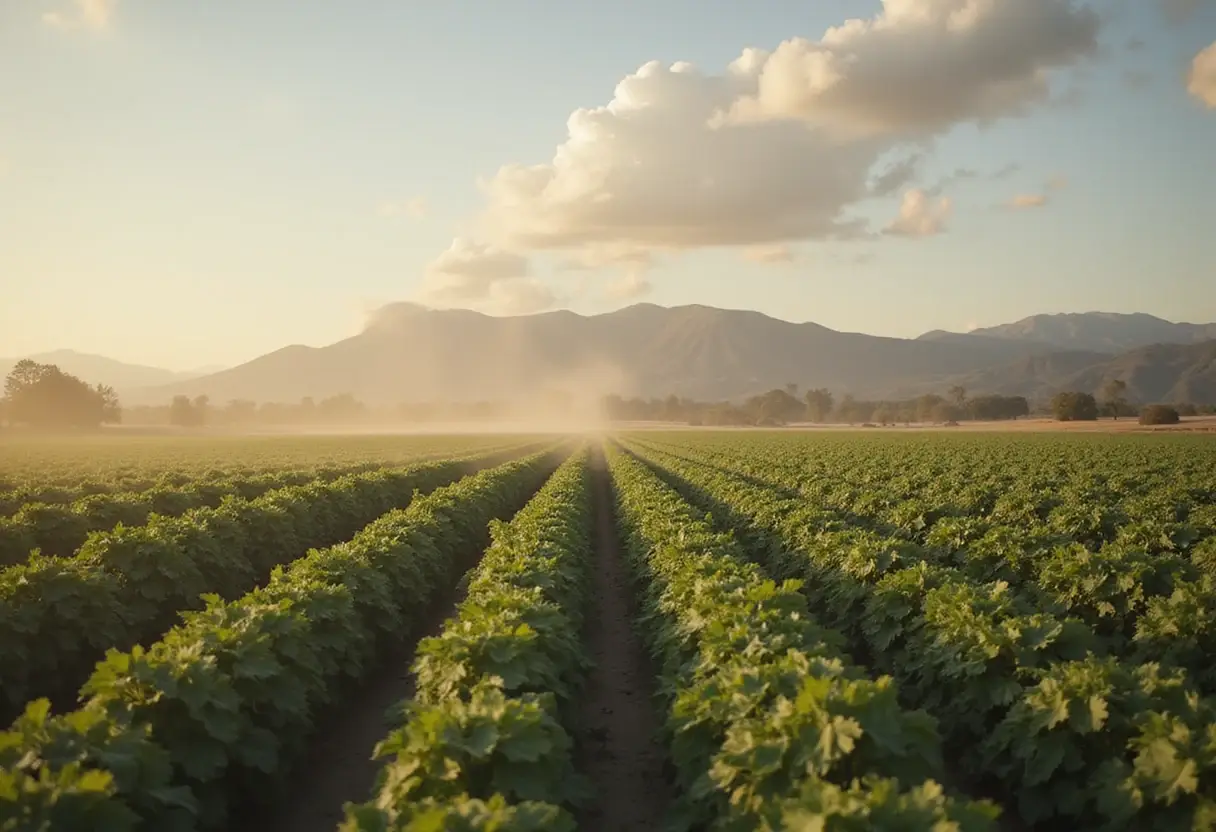
California's new $19.75 hourly minimum wage for farm labor took effect against sharp industry pushback, with growers warning the pay floor will lift production costs, food prices and pressure from lower-cost growing regions. Farm Progress America reported the backlash this week.
The figure stands well above the federal minimum wage of $7.25 an hour, and California growers say the gap now defines their cost structure. Labor ranks among the largest line items on many of the state's fruit, vegetable and specialty crop budgets, where hand harvest remains the norm.
What does the wage change mean for growers?
The $19.75 floor applies to farm labor in a state that already carries some of the nation's highest input costs. Growers who spoke with Farm Progress America framed the increase in three ways:
- Higher direct labor costs on labor-intensive crops
- Downstream pressure on food prices as margins compress
- Sharper competition from regions paying far less for equivalent work
The complaint is not new, but the number sharpens it. Each wage step, growers argue, narrows the margin between California production costs and those of rival regions that face no comparable mandate.
For commodity groups and cooperatives, the arithmetic lands at the packout. When hourly labor rises, per-unit harvest costs rise with it, and the pass-through question — absorb it or price it into the box — becomes immediate.
How does the $19.75 rate compare?
The rate towers over the federal floor. A California crew member at the new minimum earns roughly 2.7 times the federal $7.25 baseline before any overtime, payroll taxes or workers' compensation add-ons.
That multiple matters for buyers. Retailers and processors sourcing from multiple states can shift volume toward lower-cost origins, and growers say that shift, not the wage itself, poses the existential threat.
Will food prices rise?
Growers and industry representatives quoted in the report expect cost pressure to move down the chain. Food prices, they cautioned, respond to production costs with a lag and unevenly across categories.
Labor-intensive crops carry the heaviest exposure. Mechanized row crops spread labor costs across more acres; hand-picked specialty crops do not.
What happens next?
The industry response now moves through trade associations and policy channels, with grower groups signaling they will press lawmakers on the cumulative burden of wage mandates, overtime rules and regulatory compliance costs.
Farm Progress America's reporting frames the central question ahead: whether California growers can hold share against lower-cost regions while paying the nation's top farm wage. Expect the cost gap to anchor that fight through the next budgeting and contracting cycle.
via Farm Progress (Source)
More from Grace Kim
Show full bio
Correspondent covering people, launches and day-to-day practice in Agribusiness coverage for industry professionals at Agribusiness Wire.
453 articles