Lot No. LOT-8501 · offered November 15, 2026
Seeds, Crop Protection & FertilizerLot sheet
Bayer's Preceon Short Corn Planted on 180,000 Acres in 2026
Bayer says Preceon short-stature corn, planted on up to 190,000 acres in 2026, cuts derecho losses with 39% more root biomass and season-long sprayer access.
Market notes
- 180,000–190,000 acres of Preceon short-stature corn were planted in 2026, mainly in Iowa, Illinois and Indiana.
- Preceon targets about 7 feet versus 10–11 feet for traditional corn; trials show roughly 39% more root biomass.
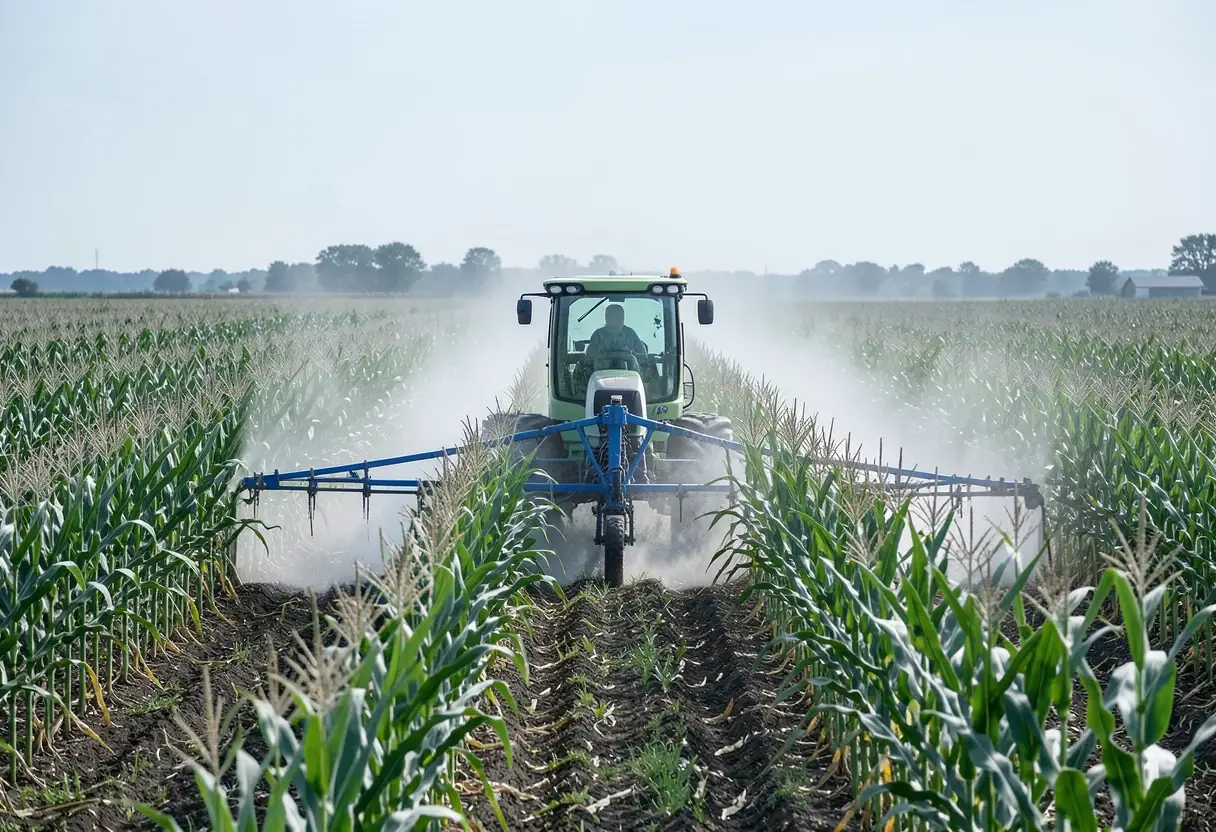
- Short stature lets growers run conventional ground sprayers for late nitrogen and fungicide instead of hiring drones, airplanes or high-clearance machines.
- Nutrient needs per bushel, planting rates and equipment match tall corn, with yields expected to hold.
Growers planted 180,000 to 190,000 acres of Bayer's Preceon short-stature corn in 2026, a figure the company frames as proof of demand for hybrids built to survive the derecho winds now hitting the Midwest several times a year.
Andrew Penney, team lead for Bayer's Preceon Smart Corn System, said the genetics answer a risk growers in Iowa, Illinois and Indiana know firsthand. Penney, an Iowa native, recalls the 2020 derecho that flattened cornfields across the Hawkeye State. Reports of derechos — strong straight-line winds — now surface several times a year, he said, and July and early August storms can strip a significant share of a corn crop.
"We've created not only a shorter plant, but we've also created a plant that is much more resilient to wind damage," Penney said. "As we look at some of these storms that much of the Corn Belt has seen this year — lots of wind — that have come with rain, Preceon has come out really well."
How short is short-stature corn?
Preceon targets about 7 feet, with plants ranging from 6 1/2 to 8 feet. Traditional corn often reaches 10 to 11 feet and can hit 14 feet. The height reduction comes from shorter internodes below the ear leaf, not fewer leaves: land-grant university research shows the plant keeps the same leaf count as tall corn and redirects energy to roots, leaves and the ear.
"Trials show that we have about a 39% increase in our root biomass," Penney said, with benefits showing in drier regions where soil water-holding capacity is limited. More root biomass means deeper soil exploration for water and nutrients, which may sustain yields under drought.
What does wind damage cost growers?
High winds cause greensnap and lodging in tall corn. Iowa State University Extension and Outreach defines greensnap, or brittle snap, as rapidly growing stalks broken by sudden thunderstorm downburst winds. Agronomics compound the risk: warm, dry vegetative periods drive deep roots, while cool, wet conditions produce shallow root systems prone to root lodging in saturated soils.
"Even with high yield potential, if you have greensnap, there's a big risk to lose the entire crop," Penney said. "To a lesser extent, if you have lodging, then it really slows you down come harvest time. Slowing down the harvest has a big impact not only on time but also profitability."
What changes in the field?
Nutrient requirements per bushel match tall corn, and Bayer expects yields to hold relative to conventional hybrids. Planting rates stay the same, as do planting and harvest equipment.
The main operational difference is sprayer access. At 7 feet, the crop allows a conventional ground sprayer to run later into the season — a cost consideration, since most growers do not own high-clearance machines.
"With short stature we're able to access the field throughout the entire growing season, and when you look at traditional ground sprayers that many growers use and dealers use, we're able to go in and apply side-dress nitrogen later into the growing season compared to tall corn," Penney said. "We're also able to apply fungicide when you want, versus having to wait for a drone or airplane to make that application later."
Where is it being tested?
The 2026 acres sit primarily in Iowa, Illinois, Indiana and nearby states. Some seed units went to East Coast states for dairy nutrition testing. Evaluations continue in Texas and Georgia, and Penney expects research to extend into the western High Plains.
For grazing and forage, research so far shows promising results for beef and dairy cattle nutrition from grazing stalks or harvesting silage.
Penney advises growers to work with their Bayer representative and agronomist, possibly starting with a small tract to gauge performance. Interested growers can contact a local dealer; details are posted at cropscience.bayer.us. Bayer will keep scaling the system as wind risk reshapes hybrid choices across the Corn Belt.
via cropscience.bayer.us (Original)
More from Grace Kim
Show full bio
Correspondent covering people, launches and day-to-day practice in Agribusiness coverage for industry professionals at Agribusiness Wire.
519 articles
Also in the yard
- Grain, Livestock End Lower on Profit-Taking Ahead of Friday WASDE
- Wet Weather Compromises Midwest Corn Stalks, Slows Harvest
- Carthage, Ill., corn tracks 15-20 bushels below 2025 as wet 2026 tests Harrells
- Warm Nights, Heavy Rains Drag Illinois Corn Yields at Harvest
- Half-Inch Rain Keeps Combines Parked in Eastern Iowa Cornfields