Lot No. LOT-7515 · offered September 29, 2026
Precision Agriculture & AgTechLot sheet
ArkeaBio Raises $15M for Methane Vaccine, Cuts a Third of Staff
The $15M Series A2, led by AgriZeroNZ, funds a 10-15% methane-cutting cattle vaccine targeting New Zealand dairy, with first revenues planned for 2028.
Market notes
- ArkeaBio raised a $15 million Series A2 led by AgriZeroNZ, with support from Breakthrough Energy Ventures, while cutting about a third of its headcount.
- The first vaccine product targets a 10-15% methane reduction in cattle, with dosing every three months for dairy and a New Zealand regulatory filing expected next year.
- Commercialization and first revenues are planned for 2028, with coformulation alongside vaccines used by 99% of New Zealand dairy cattle seen as the key cost lever.
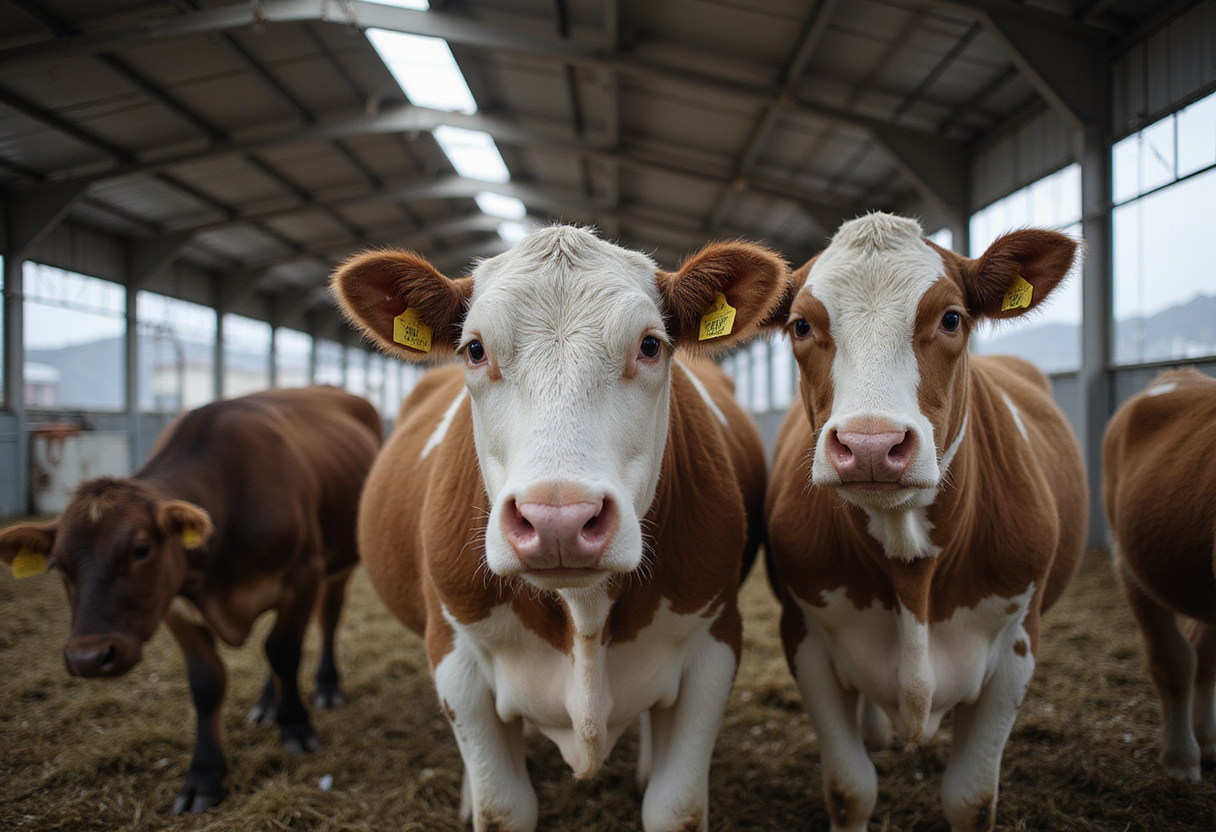
ArkeaBio, a Boston-based startup developing a vaccine to cut livestock methane emissions, has raised a $15 million Series A2 round led by AgriZeroNZ and backed by Breakthrough Energy Ventures. The same week it secured the capital, the firm cut roughly a third of its headcount as it pushes toward commercialization.
CEO Frank Wooten, who cofounded virtual fencing company Vence and joined ArkeaBio in September 2025, said the layoffs were a runway decision, not a science failure. "Given the environment, we had to pare back some of our initiatives and really hone in on our initial market [New Zealand], initial product and critically initial revenues," he said. "As such, we needed to let go of some really great scientists as well as commercial folks to ensure runway to hit those critical milestones."
He added: "This round is likely to take us through the first commercial product."
Why a vaccine
The livestock methane field is crowded with approaches: cattle breeding programs, feed additives such as Bovaer — which promises a 30% reduction in lactating dairy cattle — seaweed products claiming reductions up to 90%, and gene editing of rumen microbes. Wooten argues a vaccine beats them all on cost and scalability.
"What I've learned along my journey in agriculture so far is that it's really hard to change practices for folks, and vaccines are already used in 100% of livestock markets worldwide," he said.
Feed additives require animals on feed. "The majority of animals outside of the US are actually not ever put on feed, so when we look at a solution for a broader global market, the ability of a vaccine to have impact not only at an animal level, but in the workflows of our customer base, is the most elegant way to get that uptick in adoption," he said.
Mode of action and modest first numbers
Methane forms in the rumen, where microbes break down complex carbohydrates into carbon dioxide and hydrogen, which methanogens then convert into methane and the animal belches out. ArkeaBio's vaccine triggers the cow's immune system to produce antibodies that interfere with methanogens. Hydrogen that methanogens would normally capture is instead taken up by other microbes producing volatile fatty acids — compounds that can support milk and meat output.
That mechanism is also ArkeaBio's route to a productivity claim, but Wooten is careful not to overpromise on the first product. "We've seen early evidence of increases in the microbial communities in the cattle rumen that produce volatile fatty acids, but we don't anticipate any measurable effect on productivity until the methane reduction number is above 30%. And for our first product we're looking at something closer to 10-15% reduction in methane."
The company is starting with the highest-value targets. "There are hundreds of methanogens, but there's one particular one that represents nearly 50% of the methanogens in the rumen, so we've started by targeting that species. We're also targeting the second largest species. This is just the beginning," he said.
Dosing economics and coformulation
Commercial viability hinges on how often farmers must administer the dose. "Ideally you've got a vaccine that lasts six or 12 months, but we certainly think there's minimum viability in dairy for an intervention every three months. So our initial product will be three months, but we expect to go to six months by our second product. For beef cattle we believe that number needs to be closer to 12 months," Wooten said.
The bigger cost lever may be coformulation. ArkeaBio is evaluating pairing its antigen with a couple of dairy vaccines used by 99% of New Zealand dairy cattle. "Then the cost burden of the additional methane inhibiting vaccine drops. And our ability to offset that cost, whether it's with a carbon credit, a premium [on the milk paid by the processor or end consumer], or productivity gains, suddenly becomes much more attainable," he said.
Regulatory path
ArkeaBio has spent two years working with New Zealand government regulators to map the approval pathway and timeline. It expects to file an application next year, with commercialization and first revenues targeted for 2028.
via ccacoalition.org (Original)
More from Grace Kim
Show full bio
Correspondent covering industry trends and analytics at Agribusiness Wire.
159 articles
Also in the yard
- Bayer Leads Series A in Robigo to Scale Crop Protection Platform
- Breedr Raises $27M Series B to Scale Digital Cattle Records Globally
- Biotalys Adds Crop Protection Veterans Berwaerts and Tudor to Board
- Boozman Presses Senate Colleagues to Move Farm Bill as Session Resumes
- Senate Ag Chair Boozman Outlines Vision for Farm Bill 2.0