Lot No. LOT-6957 · offered September 29, 2026
Precision Agriculture & AgTechLot sheet
Alveo, AgriNerds Pair 45-Minute Testing With Waterfowl Risk Models
Alveo's 45-minute on-farm avian flu test will pair with AgriNerds' waterfowl risk predictions covering 160,000+ US poultry facilities, pending Q4 USDA approval.
Market notes
- Alveo's portable molecular test detects avian flu in 45 minutes at 96-99% accuracy for H5 and H7 subtypes, versus 2-3 days for lab PCR results.
- AgriNerds' Waterfowl Alert Network issues daily risk predictions relative to 160,000+ commercial poultry facilities and is used by 1,500+ farms across 25 states.
- Roughly 30% of avian flu infections spread farm-to-farm via people, vehicles, equipment or airborne material, according to Alveo's Erik Tyrrell-Knott.
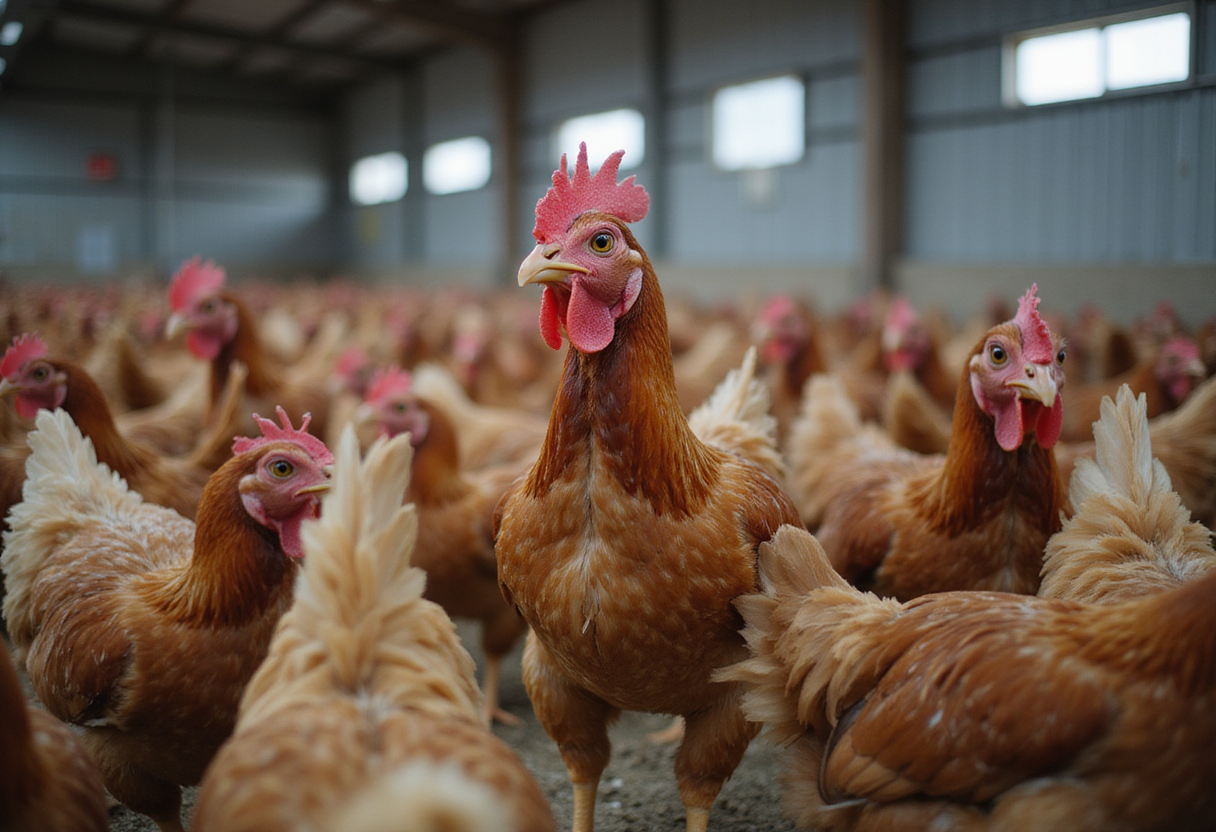
A diagnostics platform that detects avian influenza in 45 minutes will be paired with a predictive waterfowl surveillance network covering more than 160,000 US commercial poultry facilities, under a new partnership between Alveo Technologies and AgriNerds aimed at catching outbreaks before they spread.
Alveo, which makes rapid on-farm pathogen tests already sold in several countries and on track for USDA approval in the fourth quarter of this year, is combining its portable molecular diagnostics with AgriNerds' Waterfowl Alert Network. That network uses radar, satellite imagery, telemetry from radio-tagged birds and other data sources to predict where infection risk from wild birds is highest.
The partnership positions itself between two extremes producers currently face: impractical round-the-clock "super-surveillance," or waiting for clinical symptoms, testing, and then another two to three days for PCR lab results — by which time the virus may already have moved within and beyond the farm. Instead, producers could ramp up testing only when AgriNerds' model signals that migratory bird activity or other factors have raised infection risk.
"Right now, if egg production goes down, if the birds appear lethargic, or the mortality rate goes up, farmers have a decision to make," said Alveo president Erik Tyrrell-Knott. "It might be bird flu. It might be something else. Are you going to incur a lot of expense and take all these [extra] biosecurity measures flying blind, or are you going to wait days [for lab test results] and it's business as usual [in the meantime]?"
He added: "We've got two 21st century technologies combining to provide informed, intelligent, data-driven surveillance guidance, which is something that is totally missing in the current landscape."
Grading risk farm by farm
Waterfowl are a major reservoir of bird flu, creating risk when infected birds fly over or roost near poultry farms. AgriNerds combines multiple data streams to predict waterfowl abundance near individual facilities and classifies risk as low, moderate, or high.
Seasonal migration is broadly predictable, but risk around individual farms varies significantly year to year as weather, crops, water availability and habitat shift, said AgriNerds founder Maurice Pitesky, an associate professor at the UC Davis Weill School of Veterinary Medicine. Wild birds seek food and water, and both can change — a neighboring farmer planting different crops, or heavy rain creating attractive habitat, can alter the picture.
The network now issues daily predictions across the country relative to more than 160,000 commercial poultry facilities, Pitesky said, and 1,500-plus farms across 25 states already use the data. "The farm doesn't change location, but the risk does change."
Users can opt to receive alerts only when a farm enters the highest-risk category. "The vet wakes up and is notified in real time: You've got a red day today," Pitesky said.
What early detection changes
Early detection cannot save infected birds. But it can restrict movements of employees, feed and waste trucks, and allow farms to modify ventilation practices to limit dispersal of contaminated material — measures aimed at containing farm-to-farm transmission. That matters because infection does not only pass from wild birds into poultry: in roughly 30% of cases it spreads between farms through people, vehicles, equipment or airborne material, Tyrrell-Knott claimed.
Alveo's results could also sharpen AgriNerds' risk models. Rather than relying on county-level detections, the model could incorporate geotagged test results from individual farms, combined with wind direction and other environmental data. "If you have an on-farm test that comes back positive, we can understand where feather dander might be traveling from infected facilities and warn farms that are downwind," Pitesky said.
Longer term, the companies argue rapid testing plus detailed bird-movement intelligence could cut the number of birds culled in large outbreaks. "We believe in future with our accuracy, our sensitivity, the rapidity and trustworthiness of our results, that you could start to partially depopulate some of these complexes when you've got 13 barns with two million birds on a complex, instead of having to cull all the birds," said Tyrrell-Knott.
Testing asymptomatic flocks
Alveo's platform uses molecular amplification rather than the lateral-flow technology common in rapid strip tests, which Tyrrell-Knott said miss the virus 30-40% of the time, producing false negatives. The firm has reduced laboratory-grade amplification technology "to the size of a cell phone and made it rugged, easy to use and affordable," he said.
The test distinguishes between H5 and H7 subtypes of avian influenza at 96-99% accuracy — approaching lab PCR performance — with results in 45 minutes rather than two to three days. The US version under evaluation uses oropharyngeal swabs; outside the US, Alveo also uses cloacal swabs.
The broader ambition, Pitesky said, is to shift bird flu management upstream — from reacting to outbreaks toward testing when farms face unusually high external risk. "In this way, agriculture can move past reactive disease management to adopt a proactive, risk-informed approach."
Alveo has been approved for experimental use by the USDA and state veterinarians. "We believe we're on track for approval in Q4 of this year as the first on-farm molecular bird flu test in the US," Tyrrell-Knott said. "We're not allowed to pre-sell but we spoke at a big poultry conference in Texas a few weeks ago and we were mobbed."
via alveotechnologies.com (Original)
More from Olivia Hart
Show full bio
News editor covering media and advertising at Agribusiness Wire.
137 articles
Also in the yard
- USDA: Broiler Egg Sets Jump 2.535 Million in Latest Week
- SIU Researchers Build Robot, AI to Detect Soybean Diseases Early
- Ohio Mesonet Expands Real-Time Weather Data for Farm Decisions
- Precision Agriculture: Drones, Satellites and AI Target Input Costs
- AI Offers Promise for Agriculture, but Smallholders Risk Being Left Behind