Lot No. LOT-5108 · offered September 26, 2026
Precision Agriculture & AgTechLot sheet
360 Rain: Autonomous Irrigator Finds Second Life as Manure Applicator
360 Rain, built as an autonomous irrigation machine for dosed water application, now doubles as a manure and nutrient applicator, applying nutrients in small, measured doses across the season.
Market notes
- 360 Rain was originally designed as an autonomous irrigation machine applying water in small, timed doses
- The machine now also functions as a manure and nutrient applicator using the same precision delivery system
- Autonomous operation removes labor constraints, allowing repeated small-dose applications through the season
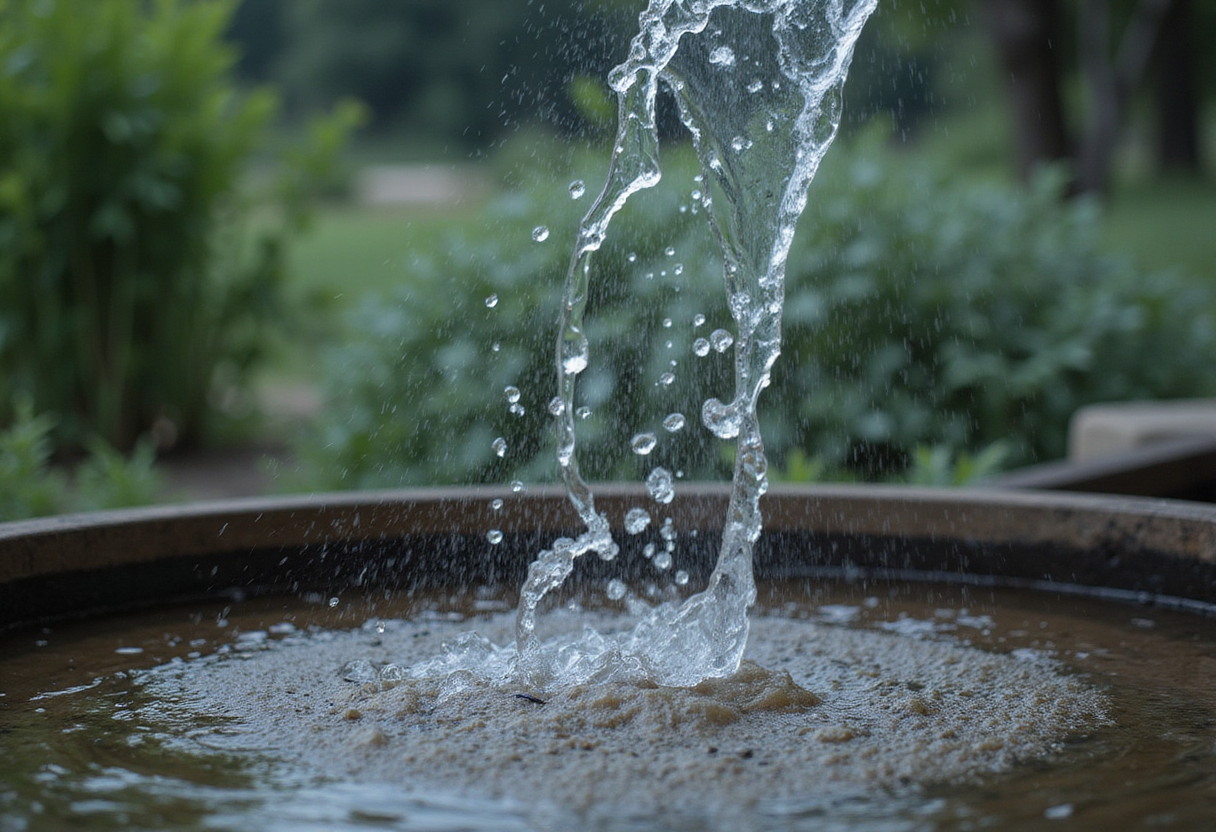
An autonomous irrigation machine originally engineered to apply water in small, timed doses has found a second career spreading manure and nutrients — and the pivot could matter for livestock producers facing tightening rules on manure application and rising fertilizer costs.
The machine, 360 Rain, started as an answer to a straightforward question in the field: can an irrigation system apply water the way a grower spoon-feeds a crop, in measured portions matched to demand rather than in heavy, infrequent soakings? Its developers built it to move through the field on its own, dispensing water incrementally — an approach aimed at reducing runoff and keeping moisture available at critical growth stages.
What emerged, according to the company's account of the machine's development, is a platform whose precision extends beyond water. The same delivery system that meters irrigation water can carry manure and nutrients, applying them in the small, controlled doses that gave the machine its name. That capability turns a piece of autonomous watering equipment into a highly efficient nutrient applicator.
For dairy and livestock operations, the implication is direct. Manure has always carried nutrient value; the difficulty has been applying it evenly, at agronomic rates, without overloading fields nearest the barn. An applicator that dispenses nutrients in measured portions mirrors the logic of split-application fertilizer programs — feeding the crop through the season rather than front-loading a single pass.
The machine's origin story is a case study in how autonomous guidance changes what is possible with application equipment. Because 360 Rain moves through the field without an operator, the frequency of application stops being a labor constraint. Water, manure and nutrients can go on in small doses repeatedly across the season, which is precisely the regime that spoon-feeding implies.
The company presents this as an evolution from concept to field reality: an idea for an autonomous irrigation machine that grew into a multi-purpose nutrient tool. As with any manufacturer claim, producers will want to weigh the reported efficiency gains against their own application windows, manure volumes and nutrient management plans — but the underlying logic of rate-based, frequency-based application is consistent with established agronomy.
The next step for interested growers is on-farm evaluation: how the machine's dosed application compares, in nutrient-use efficiency and in cost per acre, with conventional spreading and injection equipment under their own conditions.
via Farm Progress (Source)
More from Rebecca Stone
Show full bio
Market editor covering industry trends and analytics at Agribusiness Wire.
135 articles
Also in the yard
- Smart Farming Tools Cut Water Use and Lift Crop Quality, Report Says
- Irrigation Makers Push Precision and Remote Control at Husker Harvest Days
- Google Applies AI Precision Agriculture to Cut Water Stress
- USDA Moves to Build Digital Infrastructure for Precision Ag
- Data-Driven Farming Cuts Inputs Up to 30 Percent — If Connections Hold