Lot No. LOT-9769 · offered October 30, 2026
Seeds, Crop Protection & FertilizerLot sheet
$1.3 Billion USDA Fertilizer Subsidy Meets a $1,440-per-Ton Math Problem
USDA's $1.3 billion fertilizer award, announced by JD Vance in North Platte, draws fire from farmer Trent Loos over green ammonia's $1,440-per-ton electricity cost.
Market notes
- USDA is awarding $1.3 billion to eight domestic fertilizer manufacturers, announced by JD Vance in North Platte, Nebraska, on Oct. 22.
- Green ammonia production requires about 12 megawatts per ton, equal to $1,440 per ton in electricity at Nebraska's 12 cents per kWh.
- The 45V Clean Hydrogen Production Tax Credit pays up to $3 per kg of hydrogen; one ton of ammonia needs about 180 kg of hydrogen.
- Maximum 45V credit requires lifecycle emissions below 0.45 kg CO2e per kg of hydrogen and is multiplied fivefold with wage and apprenticeship compliance.
- Solar power costs three to seven times more per unit than natural gas or coal generation, per data cited by Trent Loos.
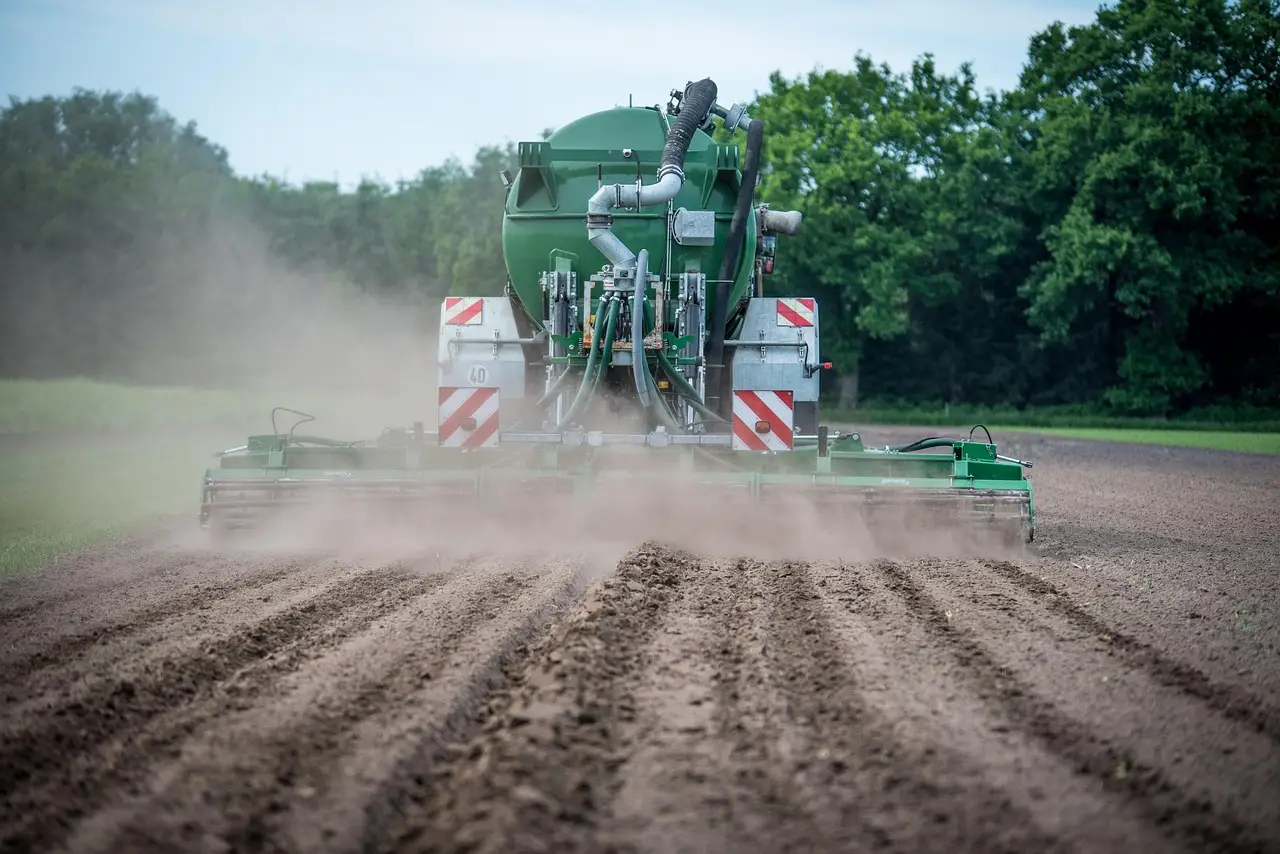
USDA is committing another $1.3 billion to domestic fertilizer manufacturers, and one of the eight recipients, Talus Renewables, makes green ammonia whose electricity input alone costs an estimated $1,440 per ton at Nebraska power prices. That figure sits at the center of a sharply worded critique from Trent Loos, a sixth-generation farmer and host of the daily radio show Loos Tales, published in High Plains Journal.
Vice President JD Vance announced the awards from the stage in North Platte, Nebraska, on Oct. 22. From the stage, Vance named Talus Renewables as one of the eight businesses receiving the largest payment. Loos writes that he had never examined green ammonia before researching Vance's statement, and what he found changed his view of the program.
What does green ammonia actually cost to make?
Green ammonia production captures nitrogen from the atmosphere and combines it with hydrogen split from water using electricity. Talus Renewables' founder said in a video: "It takes a lot of power to make this happen." Loos calculates that the process requires 12 megawatts per ton of fertilizer produced.
At 12 cents per kilowatt-hour — the rate Loos uses for Nebraska — that electricity demand works out to $1,440 per ton in power costs alone. Loos draws the comparison directly: growers have been complaining about $1,000-per-ton fertilizer, and federal subsidies now support a product whose manufacturing electricity bill exceeds that retail pain point by 44 percent.
The company plans to source its power exclusively from wind and solar. Loos cites data reporting that solar costs three to seven times more per unit of power than generation from natural gas or coal. He concedes that, net of solar subsidies, the cost could be argued down to roughly double the gas or coal equivalent, but notes the U.S. taxpayer still funds the difference.
For a land-and-output comparison, Loos quotes energy writer Norman Rogers, author of the book Dumb Energy:
The Higgins plant can provide about three times as much electricity at a fifth the cost per megawatt hour compared to the Gemini solar plant. It works day or night whether or not it is cloudy. It requires 66 acres of land, not 7100.
Rogers also argues the emissions case is thin: the United States accounts for about 12 percent of world CO2 emissions, and the U.S. electric power industry for about 3 percent, with U.S. emissions declining on increased use of low-carbon natural gas. China and India, he notes, emit three times as much CO2 as the United States, and their emissions are rising.
How do the tax credits bridge the gap?
Loos traces the subsidy stack through the IRS Tax Code. The Inflation Reduction Act created a set of tax credits later modified by the Big Beautiful Bill, yet green ammonia production still qualifies for the 45V tax credit.
The primary federal incentive is the 45V Clean Hydrogen Production Tax Credit, worth up to $3 per kilogram of clean hydrogen produced. Because one ton of ammonia requires approximately 180 kg of hydrogen, the credit translates to several hundred dollars per ton of ammonia — effectively bridging the cost gap between green and grey ammonia (conventional ammonia produced from fossil feedstocks) in supported markets.
Two conditions shape the payout:
- Maximum credit requires demonstrated lifecycle greenhouse gas intensity below 0.45 kg CO2e per kg of hydrogen.
- The credit value is multiplied by five if the facility meets prevailing wage and apprenticeship standards.
Green ammonia projects may also leverage 45Q tax credits for carbon capture and sequestration where applicable to their production process.
What is the argument about?
Loos opens by conceding the motive: no one should argue with self-sufficiency, and U.S. agriculture has grown dependent on too many imported inputs. His objection is to cost and feasibility — "ridiculous," in his words — of the chosen approach.
He frames the broader issue in generational terms. Growing up in the 1980s, he writes, the American Dream meant investing, working hard and catching a dose of luck. Now, he argues, attorneys who know how to search the welfare state draw tax money from working people to fund what he calls a free-for-all for an elite subclass handpicked by government.
His closing call is political: "The real Americans need to take back their dreams and help put a stop to the nightmare created by big government."
High Plains Journal notes the views are the author's own. Loos is also founder of Faces of Agriculture, a non-profit organization focused on the human element of production agriculture. For growers weighing nitrogen budgets, his core question stands: whether subsidized domestic capacity at these power costs strengthens farm margins or simply relocates the input bill to the taxpayer column.
via loostales.com (Original)
More from Rebecca Stone
Show full bio
Market editor covering people, launches and day-to-day practice in Agribusiness coverage for industry professionals at Agribusiness Wire.
464 articles
Also in the yard
- USDA Puts $573 Million Behind Eight Fertilizer Plant Projects
- Minnesota Firm Targets Nitrogen Loss as Fertilizer Prices Swing
- Anhydrous Ammonia Prices Jump 25%, Squeezing U.S. Farm Margins
- GROWMARK Takes Minority Stake in 500,000-Ton Indiana Ammonia Plant
- Trump Says U.S. Pursuing 'Massive' Belarus Potash Deal