Lot No. LOT-8468 · offered November 5, 2026
Seeds, Crop Protection & FertilizerLot sheet
Weed Control Costs Hit $2,000 Per Acre Without Herbicides
Dicamba re-registration and a glyphosate Supreme Court win headline recent crop protection victories, but UGA's Culpepper warns the industry is failing to explain weed control economics to the public.
Market notes
- Cotton weed control costs $21 per acre with herbicides and conservation tillage, versus over $2,000 per acre without chemicals
- USDA data show the U.S. loses about 1.7 farms per hour in 2026, roughly 287 acres per hour
- One U.S. farm now feeds 184 people, up from 169 in 2023
- Dicamba was re-registered after an earlier negative court decision
- The U.S. Supreme Court ruled in favor of federal labeling for glyphosate
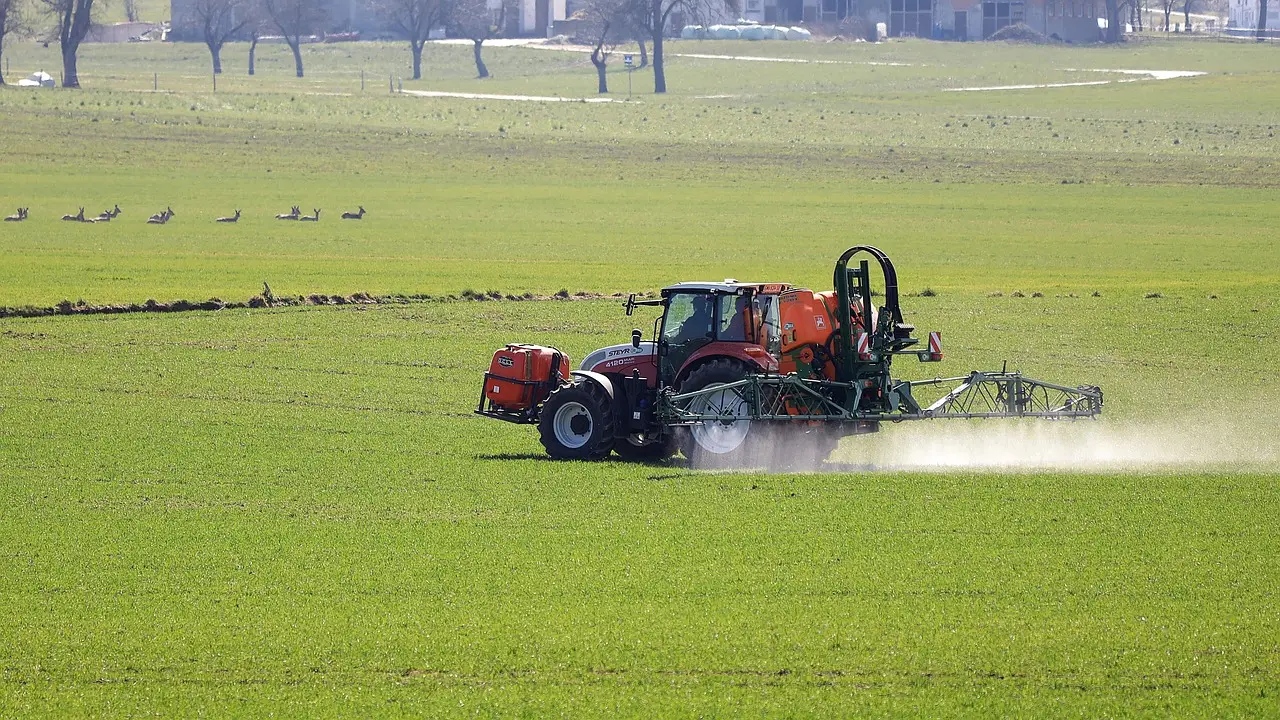
Cotton weed control costs growers $21 per acre when herbicides are paired with conservation tillage. Strip the chemicals out, and the bill climbs past $2,000 per acre, with tillage required every two to three days. Those figures, drawn from University of Georgia field research, anchored a blunt assessment of the crop protection business delivered at the 2026 Mid America CropLife Association (MACA) meeting, held September 8-10 in Omaha, Nebraska.
Dr. Stanley Culpepper, Professor and Extension Weed Scientist at the University of Georgia, told the assembled input makers that the industry can claim two hard-won legal victories in recent months. Dicamba has been re-registered for use after an earlier negative court decision. The U.S. Supreme Court has also ruled in favor of federal labeling for glyphosate. Both outcomes protect tools growers depend on.
What did Culpepper say about the industry's blind spot?
The courtroom wins, however, sit beside a communications failure. Culpepper put it in historical terms.
"A great weed scientist once said: 'The ability of a nation to feed its population is directly related to how farmers control weeds on their farms,'" Culpepper said. "But today, who really understands this anymore? We as an industry are not really communicating this effectively with 99% of the people out there. And this includes our political leaders."
He tied that message to a shrinking production base. USDA statistics show the country is losing approximately 1.7 farms per hour in 2026. That pace removes about 287 acres from production every hour. Fewer than 1.9 million farms remain in the United States, and many survivors fall into the large corporate farm sector. Even so, roughly 90% of the farms still standing are categorized as small family farms.
Pesticides, Culpepper said, have driven productivity gains on farms of every size — a point he framed through feeding capacity.
How much does one farm feed?
"Back in the 1800s, one farm fed five people," Culpepper said. "But today, one farm can feed 184 people, and that's up from 169 people in 2023. Having effective pesticide management tools at our disposal has played a key role in this advancement."
That jump — from 169 people per farm in 2023 to 184 today — amounts to a gain of 15 mouths fed per operation in under three years, a productivity measure few outside agriculture track.
His cotton and specialty crop research makes the economics concrete. The $21-per-acre herbicide-plus-conservation-tillage system collapses into a $2,000-plus per-acre expense without pesticides, a near hundredfold increase in weed management costs for the grower. The figure translates to more than $2,000 in extra passes, fuel, and labor on every acre of tested cotton ground, simply to substitute iron for chemistry.
What does this change for growers and policymakers?
Culpepper answered the question directly. Conservation tillage, a practice many environmental groups endorse, only pays when the herbicides those same groups want removed remain available.
"The message here is clear for the farming community: If I don't have the herbicides many of these groups want to remove from use, I can't make practices such as conservation tillage, which these groups like, pay off," he said.
The stakes grow with every lost farm. As the production base contracts, Culpepper argued, the industry's ability to explain weed control to the remaining 99% of the public — and to political leaders — becomes not a marketing task but a condition for keeping productivity gains intact.
via cropsoil.uga.edu (Original)
More from Marcus Bennett
Show full bio
Senior reporter covering regulation, policy and their impact on Agribusiness coverage for industry professionals at Agribusiness Wire.
429 articles
Also in the yard
- Growers Warn Crop Protection Supply at Stake in Supreme Court Glyphosate Case
- Ag Groups Warn Crop Protection Access At Risk in House Farm Bill Debate
- Greeneye Technology plants North American headquarters in Salina, Kansas
- Fischbach Leads House Letter Urging EPA to Preserve Key Crop Protection Tool
- Weed Scientists Urge Growers to Hit Cover Crop Windows in Grain Systems