Lot No. LOT-9599 · offered November 18, 2026
Seeds, Crop Protection & FertilizerLot sheet
UT Joins $53 Million AI Push to Find Next-Generation Herbicides
UT Institute of Agriculture researchers join MIT and Robigo on a $53 million ARPA-H project using AI to screen up to 1 billion compounds for new weed-control tools.
Market notes
- ARPA-H is funding the $53 million PLOW weed-control project through its STREAM program
- AI models are expected to screen up to 1 billion potential compounds
- UT's Neal Stewart and Scott Lenaghan will test selected compounds in lab and greenhouse trials in year one
- The research effort spans five years with MIT as lead institution and Robigo as industry partner
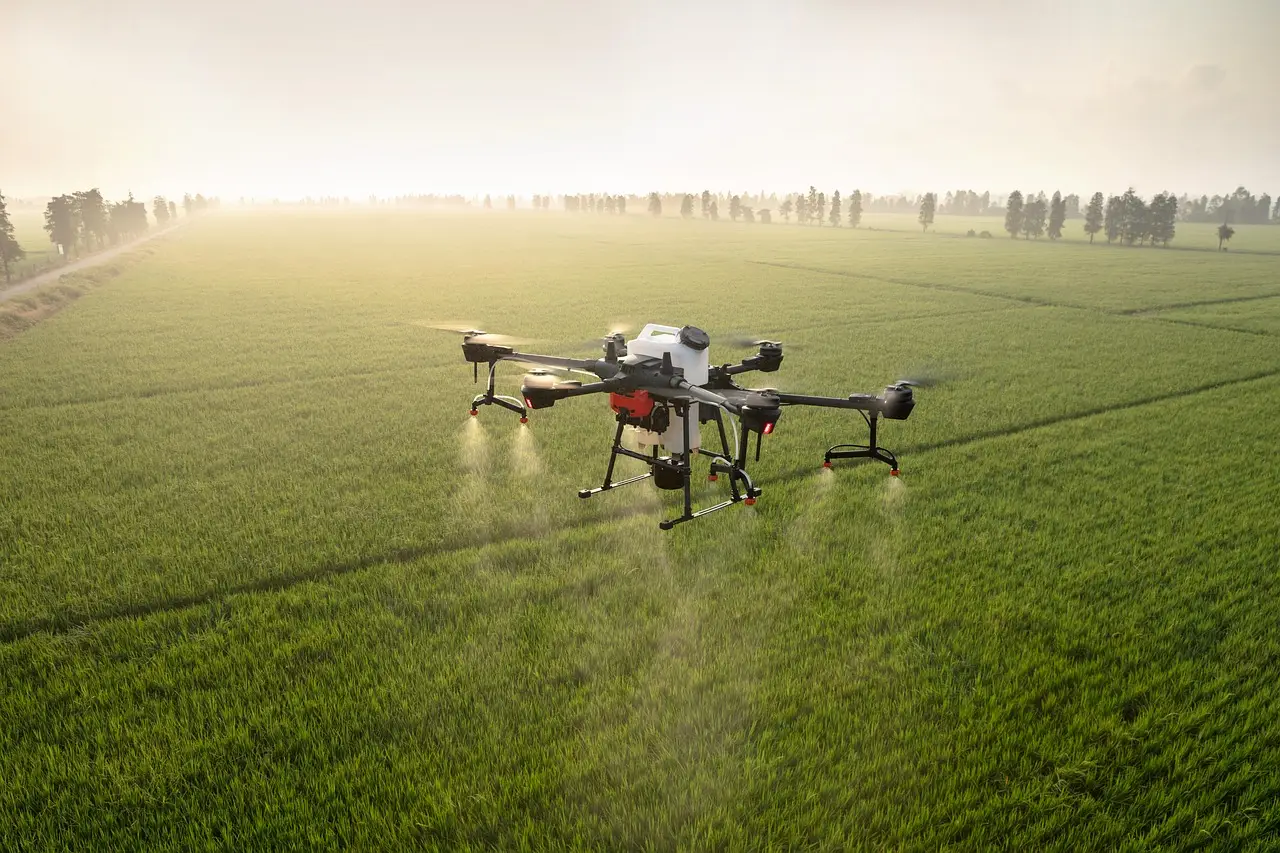
A $53 million federal research project will use artificial intelligence to screen as many as 1 billion potential weed-control compounds, and University of Tennessee researchers will handle the first round of testing against live weeds.
The U.S. Advanced Research Projects Agency for Health (ARPA-H) is funding the work through its Systems for Tracking and Resilience in Efficient Agricultural-input Management (STREAM) program. MIT leads the project, dubbed Precision Learning for On-target Weed Control, or PLOW. The research effort runs five years.
Neal Stewart and Scott Lenaghan, professors at the University of Tennessee Institute of Agriculture, will work alongside researchers from six other institutions and the biotechnology company Robigo.
What does the project actually do?
The AI tools will identify chemical compounds and biological alternatives that could control weeds while limiting unintended effects on people, crops and the environment. MIT, as lead institution, expects the models to flag up to 1 billion potential compounds before narrowing the field to candidates worth further testing.
That's where UT comes in. Stewart and Lenaghan's teams will evaluate selected compounds against weeds in laboratory and greenhouse experiments. First testing is expected during the project's first year.
The research also explores molecular methods that could target weeds without conventional herbicide applications.
Why herbicide resistance is driving the spending
Herbicide resistance has become an escalating cost driver for row-crop producers. Repeated use of the same weed-control products lets resistant weed populations develop and spread. Weeds that survive applications compete with crops for nutrients, water and growing space — cutting yields and pushing up management costs.
Chris Voigt, the project's lead investigator and head of MIT's Department of Biological Engineering, put the problem bluntly: "There's a real need for new herbicides because of resistance mutations that have been arising."
New modes of action have been scarce for years, which is why a billion-compound screen matters. The scale is the point.
What does this change for growers?
Nothing immediately. This is a five-year research effort, and the AI-driven shortlist has to clear greenhouse and laboratory evaluation before any product development begins.
But the pipeline targets more than yield protection. Lenaghan said the work could reach beyond crop protection: "The development of molecular herbicides has the opportunity to redefine weed control and ensure the safety of not only our crops, but also our key pollinators."
Stewart said artificial intelligence could change how researchers identify potential weed-control products in the first place, replacing slower conventional discovery with model-driven screening.
The project pulls together expertise in plant science, synthetic biology and biological engineering to investigate alternatives to existing chemistries. It sits inside ARPA-H's broader effort to advance agricultural input technologies — a signal that federal research dollars now treat input innovation as a priority on par with health research.
For farmers fighting resistant Palmer amaranth and waterhemp, the practical payoff is still years out. Any compound that survives the UT greenhouse screens and reaches market would represent the first fundamentally new weed-control mechanism in a generation.
via utianews.tennessee.edu (Original)
More from Nathan Brooks
Show full bio
Staff writer covering regulation, policy and their impact on Agribusiness coverage for industry professionals at Agribusiness Wire.
590 articles
Also in the yard
- Wisconsin Agtech Startup Raises $5M to Develop AI-Designed Herbicides
- Syngenta Turns AI Loose on Crop Protection Development
- Moa Technology Raises £22.2M Series C to Push Novel Herbicides Toward Market
- Soilytix Deploys AI Models to Scan Soil DNA for Crop-Protection Leads
- Vision Transformer Beats CNNs on Occluded Weed ID in Wheat