Lot No. LOT-4701 · offered October 9, 2026
Agricultural PolicyLot sheet
USDA Puts $5 Million Into Wetland Restoration on Farm Easements
USDA is directing $5 million through NRCS easement programs to restore farm wetlands, part of a $625 million annual conservation allocation set to reach $700 million by 2029.
Market notes
- USDA is investing $5 million to restore and maintain wetlands on conservation easements through NRCS programs.
- The Working Families Tax Cut Act allocated $625 million for conservation easement programs this year, rising to $700 million by 2029.
- USDA wetland programs protected more than 3.4 million acres between 1990 and 2019.
- Illinois, Indiana, Iowa, Missouri and Ohio have each lost over 85% of their original wetlands.
- Iowa State University research shows strategically placed wetlands remove 30-70% of nitrate in tile water.
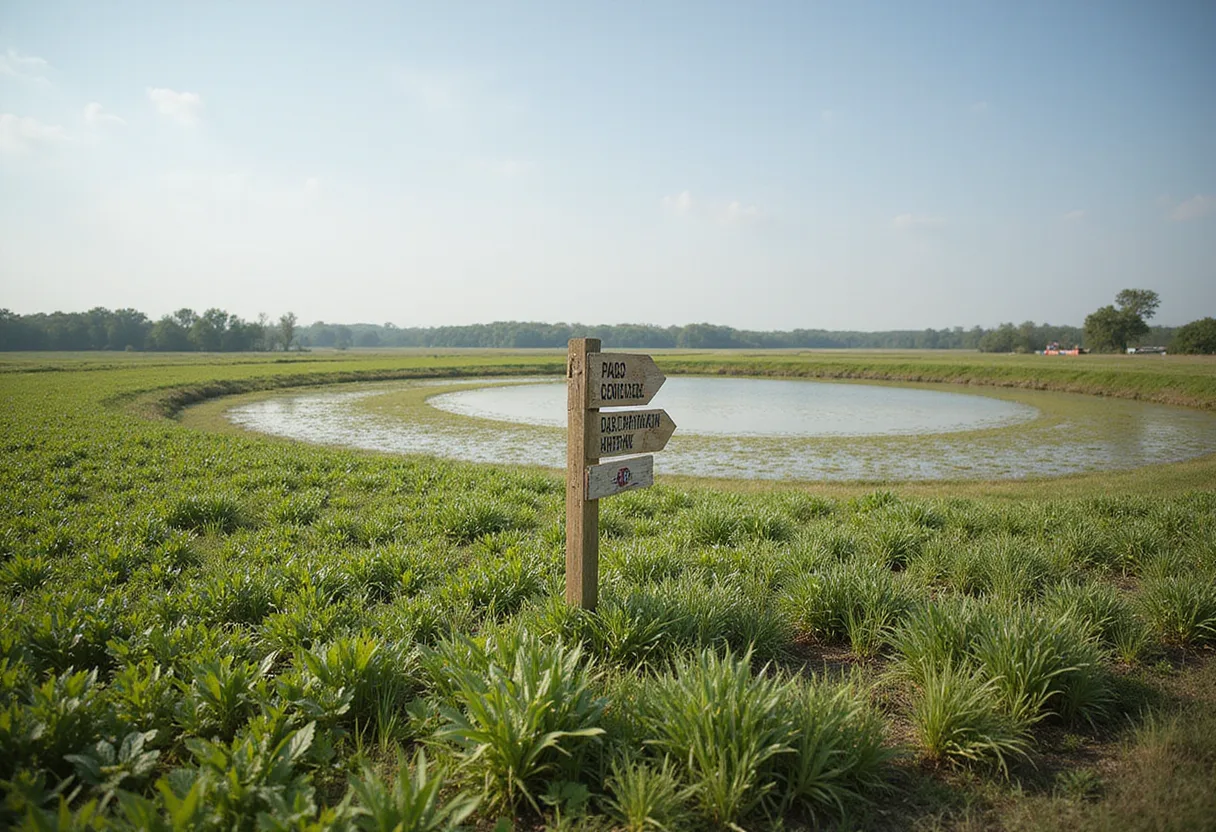
The U.S. Department of Agriculture is committing $5 million to help farmers and landowners restore wetlands and floodplains held under conservation easements.
The money flows through the Natural Resources Conservation Service's Agricultural Conservation Easement Program and the Emergency Watershed Protection Program. USDA will target three activities on the ground:
- Restoring easement acreage with levees, water control structures and tree plantings
- Maintaining wetlands that have already been restored
- Assessing the current condition of existing conservation easements
For landowners with enrolled ground, the funding covers the physical work that keeps easements functional — earthwork, structures and vegetation — rather than retiring new acres from production.
Where does the money come from?
The investment draws on the Working Families Tax Cut Act, which allocated $625 million for conservation easement programs this year. That authorization rises to $700 million by 2029, signaling a multi-year funding curve rather than a one-off appropriation.
The new $5 million tranche is a small share of the annual pool, which suggests continued allocations as assessment and maintenance work moves forward.
Why the Midwest is the focal point
Between 1990 and 2019, USDA wetland programs protected more than 3.4 million acres. The loss picture is starker in the Corn Belt: Illinois, Indiana, Iowa, Missouri and Ohio have each lost over 85% of their original wetlands.
That matters for water quality downstream. Tile drainage systems that replaced natural wetlands now carry nitrate toward the Gulf of Mexico, feeding the annual hypoxic dead zone.
Research from Iowa State University shows strategically placed wetlands can remove 30-70% of nitrate in tile water. That range makes restored wetlands one of the more effective edge-of-field tools for growers facing nutrient-loss scrutiny in upstream states.
What it means for farm margins
For operators with easements, the program shifts restoration and maintenance costs off the farm balance sheet at a time when input expenses remain elevated. Levee repair, water control infrastructure and tree establishment are capital items that otherwise fall on landowners or drainage districts.
The water quality angle also carries regulatory weight. Nitrate reduction of 30-70% in tile water, if replicated across the five states that have lost most of their wetlands, would directly address the nutrient loads driving Gulf hypoxia — a pressure point that shapes state nutrient reduction strategies in Iowa and Illinois.
USDA frames the easement work as delivering both flood-risk reduction and improved water quality across agricultural landscapes, with maintenance and condition assessments ensuring earlier investments — those 3.4 million acres protected since 1990 — continue performing as designed.
With easement funding authorized to climb from $625 million this year to $700 million by 2029, further NRCS allocations for restoration and maintenance on enrolled farm ground appear likely.
via agceuonline.com (Original)
More from Nathan Brooks
Show full bio
Staff writer covering regulation, policy and their impact on Agribusiness coverage for industry professionals at Agribusiness Wire.
466 articles
Also in the yard
- USDA to Deploy $1 Billion for Regenerative Pilot Program in 2027
- USDA Expands Regenerative Pilot Even as Farm Bill Trims Its Funds
- USDA Expands Regenerative Pilot Program Amid Farm Bill Cuts
- USDA Lifts Regenerative Ag Pilot to $1 Billion for Fiscal 2027
- USDA Expands Regenerative Agriculture Pilot Amid Conservation Funding Fight