Lot No. LOT-6636 · offered September 27, 2026
Precision Agriculture & AgTechLot sheet
Universities Launch High-Tech Agriculture Degrees as Farming Goes Digital
Universities are creating new high-tech agriculture degrees combining agronomy with data science and robotics, responding to industry demand for tech-savvy graduates in modern farming.
Market notes
- Universities are developing new agriculture degree programs blending traditional farming knowledge with computer science, engineering, and data analytics
- Land-grant universities are leading the creation of interdisciplinary agricultural technology curricula
- Industry partnerships with agricultural technology companies are shaping new degree programs through internships and hands-on training opportunities
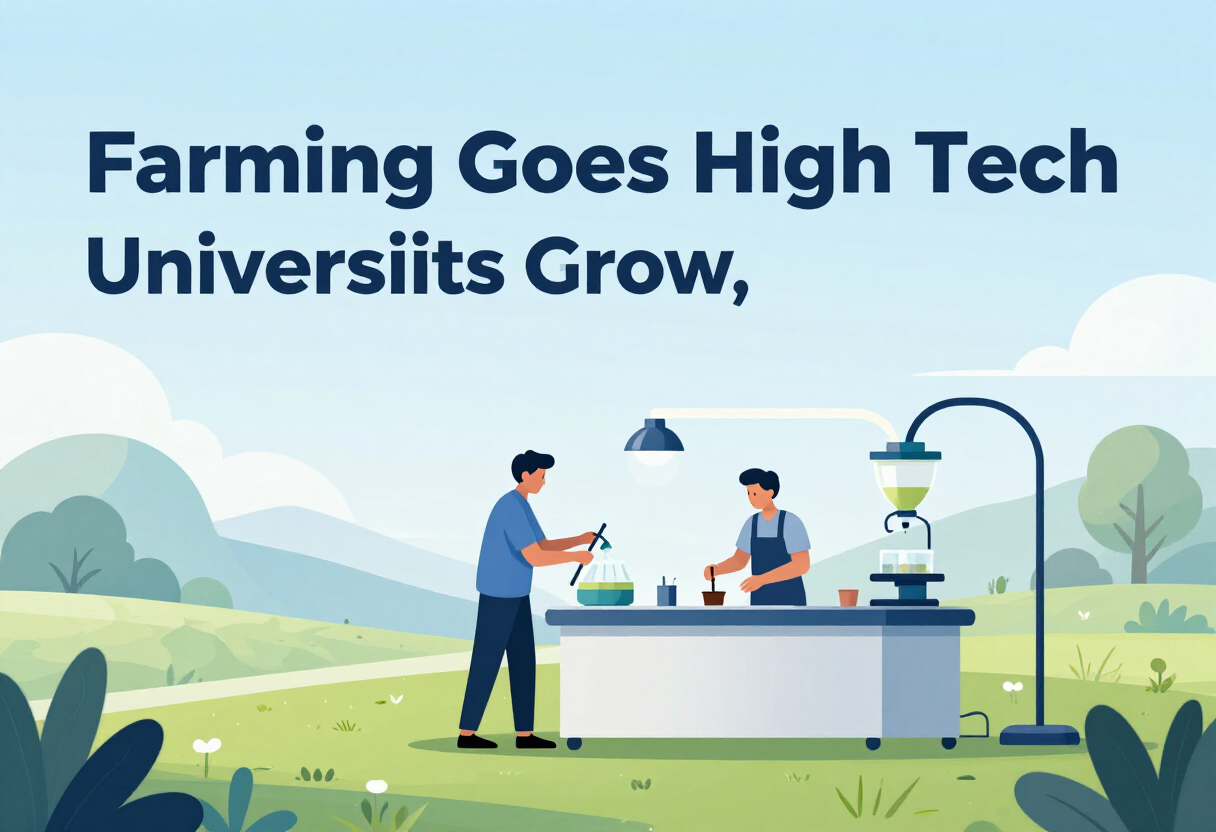
As farming increasingly goes high tech, universities across the United States are developing new types of agriculture degrees to prepare students for a rapidly evolving industry. The trend reflects a broader shift in American agriculture, where drones, sensors, GPS-guided machinery, and data analytics have become standard tools on modern farms.
The movement is particularly visible at land-grant universities, which have long served as centers for agricultural education and research. These institutions are now creating interdisciplinary programs that blend traditional agronomy with computer science, engineering, and business. Students enrolling in these new degree programs are learning to manage autonomous tractors, analyze satellite imagery, and interpret large datasets generated by precision farming equipment.
The demand for such programs stems from changes in the agricultural sector itself. Modern farming operations rely heavily on technology for everything from planting and irrigation to harvesting and marketing. As a result, employers are seeking graduates who possess both agricultural knowledge and technical skills. University administrators report growing enrollment in courses covering agricultural data science, robotics, and biotechnology.
Industry partnerships are playing a key role in shaping these new curricula. Agricultural technology companies are collaborating with universities to ensure that degree programs align with workforce needs. These partnerships often include internships, research opportunities, and access to cutting-edge equipment, giving students hands-on experience with the tools they will encounter in their careers.
The shift also signals a change in how agriculture is perceived as a field of study. Once viewed as a traditional, low-tech discipline, agriculture is now attracting students interested in STEM careers. University officials hope the new degree offerings will draw a more diverse student population and help address ongoing labor shortages in the agricultural sector.
As technology continues to transform farming, universities are expected to expand and refine these programs, ensuring that the next generation of agricultural professionals is equipped to meet the challenges of modern food production.
via Google News: Precision agriculture (Source)
More from Nathan Brooks
Show full bio
Staff writer covering marketplaces and e-commerce at Agribusiness Wire.
173 articles
Also in the yard
- Community Colleges Step Into the Farm Labor and Training Gap
- UGA's IIPA Forms Industry Advisory Board to Link Research, Growers
- OSU Ph.D. Student Wins Global Fellowship to Push Precision Agriculture
- University of Georgia Precision Ag Institute Funds Six New Seed Grants
- Agriculture Ministry to offer free AI, drone and robotics courses this autumn