Lot No. LOT-8689 · offered November 16, 2026
Agricultural PolicyLot sheet
Sixteen Groups Petition EPA to Cut Nitrate Drinking Water Limit to 1 mg/L
Food & Water Watch, EWG, NRDC and 13 other groups want the nitrate MCL cut from 10 mg/L to 1 mg/L, citing 119.7 million people on affected water systems.
Market notes
- Petition filed Monday asks EPA to cut the nitrate MCL from 10 mg/L to 1 mg/L and set the goal at 0 mg/L.
- 3,205 community water systems serving ~119.7 million people recorded nitrate at or above 1 mg/L in 2021–2023.
- EPA's July 2026 review concluded no MCL revision was needed.
- Petition projects $364.1 billion in health benefits vs. $94.5 billion in compliance costs over 50 years.
- Synthetic fertilizer is the largest nitrogen source in 41% of US watersheds; Iowa ranks first in mean surface-water nitrate.
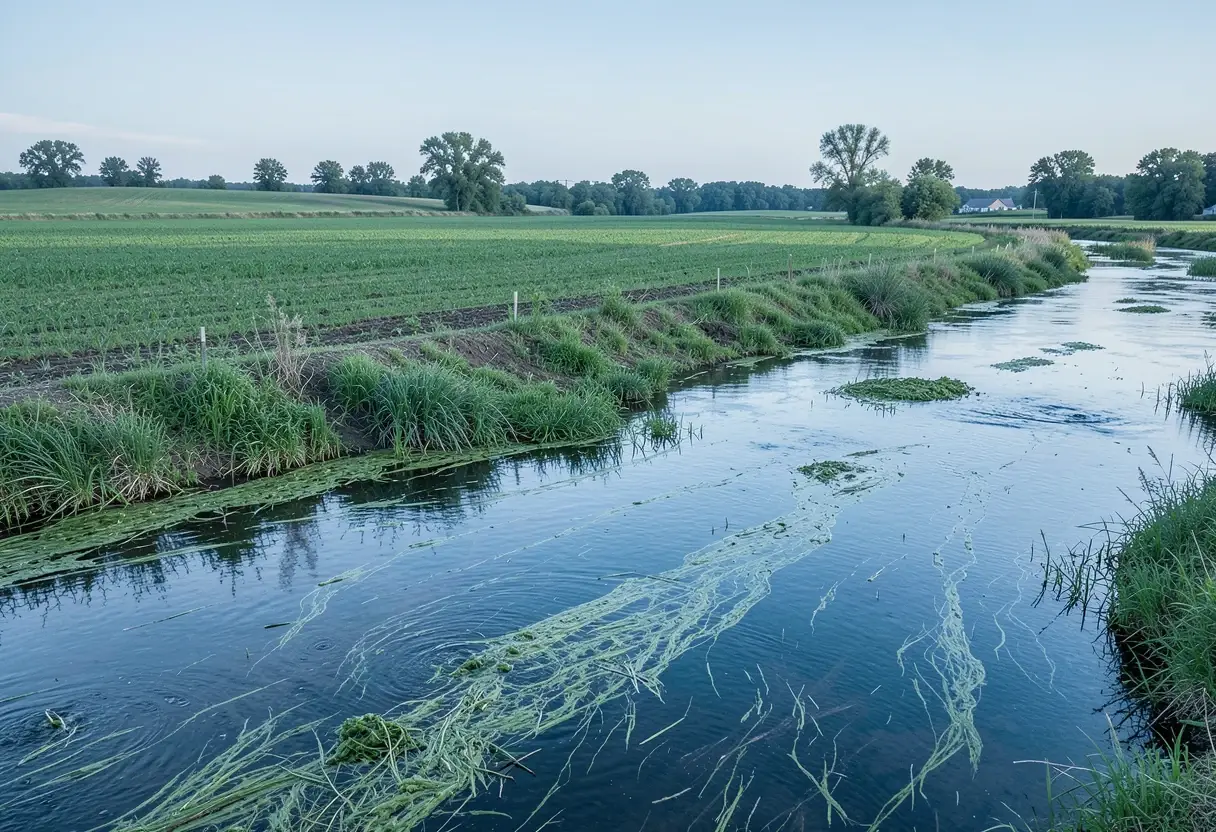
Sixteen environmental and public health groups filed a legal petition with the EPA on Monday demanding a tenfold cut in the federal nitrate limit for drinking water — from 10 milligrams per liter to 1 mg/L — a move that would put farm runoff and fertilizer practices at the center of federal rulemaking.
The petition, led by Food & Water Watch and joined by the Environmental Working Group, Center for Biological Diversity, Center for Food Safety, Sierra Club and the Natural Resources Defense Council, also asks the agency to set the Maximum Contaminant Level Goal at 0 mg/L. That goal would formally acknowledge that no lifetime exposure level of nitrate is safe. A legal petition for rulemaking obliges the EPA to respond and could trigger further litigation.
What does this change for growers and utilities?
Tyler Lobdell, an attorney with Food & Water Watch, said the groups decided to act because regulators would not. "One of the things we have sought to do here is to do the EPA's job for it," he said. "One hundred and twenty million people being serviced by public water systems are told the water is perfectly safe when the science says it is not."
The petitioners' own data analysis found 3,205 community water systems serving roughly 119.7 million people recorded at least one nitrate sample at or above 1 mg/L between 2021 and 2023. JP Rose, director of soil health at the NRDC, put the blame squarely on production agriculture. "For decades EPA has given industrial agriculture a free pass to pollute, and now one in three Americans is drinking water with dangerous levels of nitrates," Rose said in a statement.
The petition names the culprits directly:
- Excessive application of synthetic fertilizer — the largest nitrogen source in 41% of US watersheds
- Over-application of CAFO animal waste on farm fields
- Inadequately treated sewage and industrial discharges
- Failed septic systems
The science and the states in the spotlight
The current 10 mg/L standard dates to the 1970s and was finalized in 1991, set to prevent methemoglobinemia, or blue baby syndrome. Research over the past 35 years has since linked even low nitrate exposure to colon, rectal, ovarian, bladder and kidney cancers, along with neural tube defects and low birth weights.
Iowa tops the list of states with the highest mean surface-water nitrate levels from January 2015 through August 2026, according to the petition's analysis of national, state and local monitoring data. Minnesota, Delaware, Illinois, Indiana and Kansas follow. Iowa drew national scrutiny this year for near-record nitrate levels in major waterways alongside climbing cancer rates. Well water users face particular risk, since nitrate moves readily into groundwater. The petitioners also note that dozens of species listed under the Endangered Species Act face risk from the same pollution.
EPA pushes back
The EPA said it would review the petition and remains "committed to ensuring all Americans have access to clean drinking water." But the agency pointed to its most recent review of drinking water regulations, completed in July 2024, which examined available studies and found no need to revise the nitrate MCL. New studies will be considered in the next review cycle.
Costs on both sides of the ledger
Treatment costs already weigh on utilities. A 2018 Northeast-Midwest Institute study found utilities spending up to 9% of their operating budgets on nitrate treatment alone. The Association of Metropolitan Water Agencies and the American Water Works Association did not respond to requests for comment.
The petitioners argue their analysis shows a 1 mg/L standard is "technically achievable and economically justified," projecting approximately $364.1 billion in present-value health benefits against roughly $94.5 billion in compliance costs — about $269.7 billion in net benefits over a 50-year period. That is roughly $5.4 billion per year in net gains. Nancy Stoner of the Environmental Law and Policy Center told a press conference the federal government should help utilities finance compliance, so communities do not bear the full cost of "underregulated industrial agriculture."
For row-crop and livestock producers, the petition's remedy section reads like a conservation checklist: cover cropping, wetlands protection and restoration, riparian buffers, field border strips and crop diversification. If the EPA grants rulemaking, those practices could shift from voluntary incentives toward the regulatory baseline.
via thenewlede.org (Source)
More from Marcus Bennett
Show full bio
Senior reporter covering regulation, policy and their impact on Agribusiness coverage for industry professionals at Agribusiness Wire.
480 articles
Also in the yard
- Farm Bureau backs EPA WOTUS rewrite; green groups cite wetlands loss
- Farm Bill Negotiations Raise Specter of Pesticide Safety Repeal
- RFS Waiver Fight Opens as 2027 Diesel RVO Strains Capacity
- Minnesota firm tackles nitrogen pollution as fertilizer markets swing
- Supreme Court's 7-2 Roundup Ruling Reshapes Pesticide Liability