Lot No. LOT-6530 · offered November 13, 2026
Agricultural PolicyLot sheet
Illinois Bill Targets Crop Insurance Premiums After 20-Year Loss Gap
Less than 80 cents of every crop insurance premium dollar returned to Midwest farmers since 2006, data show; a new Illinois bill seeks a $762 million annual correction.
Market notes
- Midwest states received under 80 cents per premium dollar in claims from 2006–2025 vs. a ~88-cent national target.
- Sorensen's Fair Premiums for Farmers Act would mandate an RMA study and a premium-adjustment plan within three years.
- Illinois lawmakers estimate premium adjustments could save farmers $762 million annually, with corn premiums down 22%.
- University of Illinois and Ohio State researchers found Corn Belt premiums have exceeded actual losses in the region.
- USDA's Richard Fordyce said in June that RMA is already conducting a rating study on loss ratios.
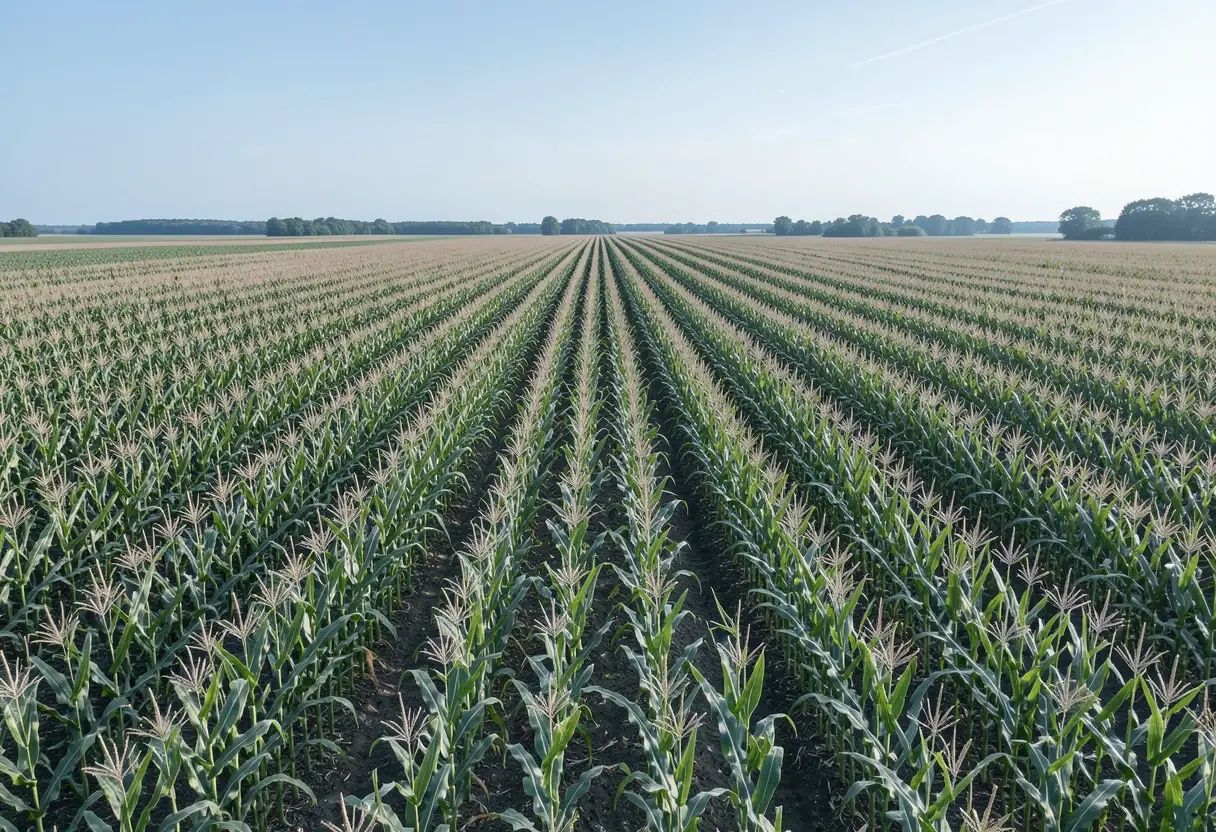
Midwestern farmers received less than 80 cents back in claims for every premium dollar they paid into federal crop insurance from 2006 to 2025 — well below the roughly 88-cent return the program is generally priced to deliver, according to a North Dakota State University analysis covering at least 10 states.
That gap now has a legislative vehicle. Rep. Eric Sorensen, D-Ill., is introducing the Fair Premiums for Farmers Act, a bill that would require USDA's Risk Management Agency to study state loss ratios by commodity, evaluate extreme weather events behind past losses, and propose adjustments to close the regional disparities.
Sorensen told Agri-Pulse in an interview Wednesday that crop insurance has become "cost prohibitive" for farmers in his state, who are "paying premiums that are high relative to the losses that they actually filed."
"Farmers are already paying high prices for diesel, for inputs, for fertilizer and seed and equipment," he said. "And on top of that, you're overpaying for insurance? It just makes the books worse."
How big are the potential savings?
The stakes for Corn Belt margins are concrete. In a letter last week, Sorensen joined Illinois Democratic Rep. Nikki Budzinski and Sens. Dick Durbin and Tammy Duckworth in arguing that Illinois farmers have been overcharged for years.
Their letter puts numbers on the claim:
- Adjusting premiums could save farmers an estimated $762 million annually.
- Midwestern premium costs would fall 11% on average.
- Corn premiums would drop 22%; soybean premiums would drop 19%.
- The lawmakers also asked USDA to consider refunds for the 2026 crop year.
A press release from Sorensen's office says soybeans grown in Indiana, Iowa, Ohio, Nebraska, Missouri, Wisconsin and Illinois have recorded "very low 10-year loss ratio averages — some nearly one-quarter the average."
The refund request is the least settled piece of the package; no USDA response or cost estimate for it appears in the record yet.
Why do the regional gaps exist?
A 2024 analysis by University of Illinois and Ohio State researchers — Gary Schnitkey, Bruce Sherrick, Jonathan Coppess, Nick Paulson and Carl Zulauf — offered an explanation: the Corn Belt "generally has premiums that have exceeded losses in the region."
"If premium rates more accurately reflected losses, Midwest farmers would pay less, while other areas would pay higher premiums," they wrote.
That last clause is the political friction point. Premium relief for the Midwest implies higher rates elsewhere, a redistribution the bill's sponsors do not address head-on.
At a House Agriculture Committee hearing in June, USDA Undersecretary for Farm Production and Conservation Richard Fordyce told Sorensen that RMA has already been working on a rating study of its own. The department has not released findings or a timeline.
What would the bill actually require?
The Fair Premiums for Farmers Act would task the Federal Crop Insurance Corporation with several mandates:
- Study loss ratios by state for every insured commodity over the 10 years before enactment.
- Identify the insurance policies and plans that drive the consistency of those ratios.
- Examine perils or events that could cause catastrophic losses significantly different from expectations for each commodity.
The FCIC would then need to produce a premium-adjustment plan within three years of the study's finalization. The plan must respect the Federal Crop Insurance Act's mandate for actuarial soundness — a constraint that limits how far rates can move in any one region. Both the study results and the draft plan would go through public comment before going to Congress.
Sorensen said he raised the issue during the 2024 farm bill markup but "promised to pursue it outside the farm bill," which produced the standalone legislation. He is open to "any and all options" for passage, including attaching it to a larger bill.
He is also hearing from corn and soybean growers who are questioning whether to subscribe to federal crop insurance at all — a participation risk that adds urgency for RMA, given the program's role in underpinning farm credit.
Whether the bill advances, the NDSU data and the pending RMA rating study guarantee that regional premium equity stays on the agenda through the 2026 crop year.
via durbin.senate.gov (Original)
More from Olivia Hart
Show full bio
News editor covering technology and product news in Agribusiness coverage for industry professionals at Agribusiness Wire.
509 articles
Also in the yard
- Aon and SAGE to Sell AI-Precision Crop Insurance for 2027
- More than 2,000 crop insurance options test 2027 planning
- Farm Bill Talks Move Out of Public View as Deadlines Press
- Farm bill deadline arrives; growers face subsidy, planning uncertainty
- Boozman Optimistic on Farm Bill Path, Eyes Post-Election Vote