Lot No. LOT-1032 · offered September 29, 2026
Commodity MarketsLot sheet
ICE Operations in Southwest Kansas Delay Fed Cattle Shipments, Industry Groups Say
ICE operations in southwest Kansas delayed shipment of thousands of fed cattle, costing producers millions as processors from Cargill, National Beef and Tyson adjust operations.
Market notes
- Kansas Livestock Association, Oklahoma Cattlemen's Association and Texas Cattle Feeders Association reported delayed shipment of thousands of fed cattle worth millions of dollars in lost revenue and added costs.
- The affected region includes plants with combined daily slaughter capacity of nearly 18,000 head: Cargill Dodge City (~6,000), National Beef Dodge City (5,800) and National Beef Liberal (6,000), per a Kansas State University study.
- National Beef's Liberal plant adjusted shift starting times, and UFCW leaders warned processing disruptions could reduce beef supply and raise consumer prices.
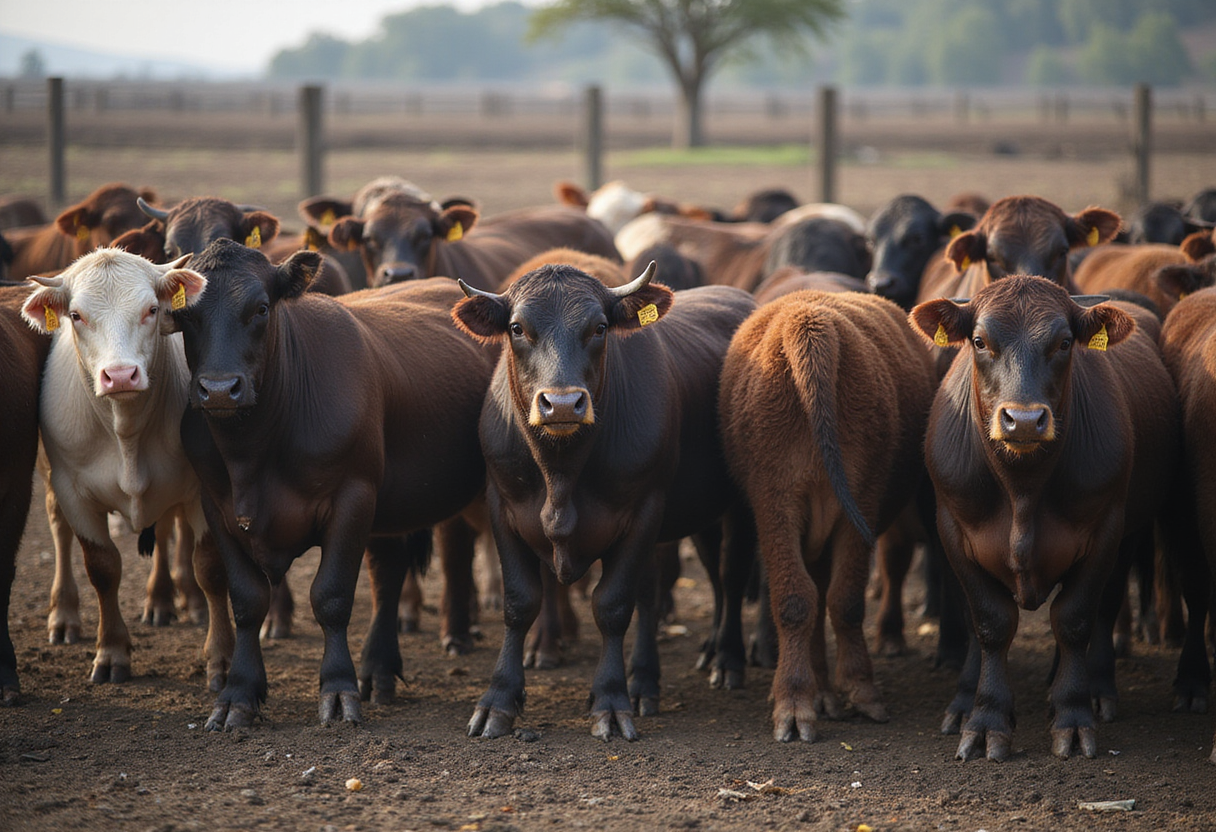
Immigration enforcement operations in southwest Kansas this week have delayed the shipment of thousands of fed cattle to processing plants and disrupted labor at beef supply chain chokepoints, according to a joint statement from three leading cattle industry groups.
The Kansas Livestock Association, Oklahoma Cattlemen's Association and Texas Cattle Feeders Association said in their Thursday statement that reported impacts of ICE raids over the past several days include delayed shipping of thousands of fed cattle to processors, "resulting in millions of dollars in lost revenue and additional costs." Workforce disruptions have also hit feedyards, dairies, processors, feed and grain company transportation hubs and community services, the groups said.
"These disruptions come at a time of enhanced focus and pressure on the cattle and beef supply chain," the statement read. "They are a costly and unnecessary impact to cattle producers already suffering from unwelcome political interference to both the markets as well as the physical supply chain. Frustratingly, the harm these actions cause to cattle producers last for days and weeks after such operations conclude."
ICE did not respond to an Agri-Pulse inquiry by press time.
The affected region hosts some of the country's largest beef processing capacity. Cargill and National Beef both operate plants in Dodge City. National Beef also runs a plant in Liberal. Empirical Foods operates a ground beef plant in Garden City, and Tyson Foods has a plant in nearby Holcomb.
The stakes for throughput are substantial. According to a Kansas State University study, the Cargill plant in Dodge City has the capacity to slaughter roughly 6,000 head of cattle per day. The National Beef plant in Dodge City can process 5,800 head per day, and the company's Liberal facility can handle 6,000 head per day.
Kansas Farmers Union Executive Director Nick Levendofsky said his understanding is that ICE has been active in both the Dodge City and Garden City areas. A statement from the United Food and Commercial Workers Union also confirmed ICE activity in Liberal.
The Kansas News Service reported Wednesday that the National Beef plant in Liberal adjusted shift starting times due to ICE activity. National Beef did not respond to a request for comment.
A Cargill spokesperson said the company complies with the law and noted that its facilities sit on private property.
Union leaders warned the enforcement actions threaten both worker safety and beef supplies. UFCW Local 2 President Martin Rosas called it "an unimaginably difficult time for our communities in Liberal and Dodge City," adding that the union is gathering information about ICE's presence and continues to support its members.
UFCW International President Milton Jones said processing disruptions caused by the raid "directly impact the safety of all workers and the supply of beef."
"If supply drops, prices will go up. At a time when working people are already struggling with record-high food costs, our country cannot afford the havoc that these inhumane policies wreak in our communities," Jones said.
Kansas' two Republican senators weighed in on X. Sen. Roger Marshall said he is closely following the ICE activity in southwest Kansas and has been in "direct contact" with Department of Homeland Security Secretary Markwayne Mullin and local law enforcement.
"When ICE operates in Kansas, it needs to coordinate with our local law enforcement. Our sheriffs and police know these communities better than anyone, and working together keeps officers and residents safe," Marshall wrote.
Sen. Jerry Moran posted that Mullin has assured him "these warrants are only for the purpose of arresting individuals who have been charged with criminal activities."
"I will remain engaged with federal and local authorities and community leaders," Moran wrote.
For cattle feeders, the timing compounds existing margin pressure. The industry groups' statement notes producers are already contending with political interference affecting both markets and the physical supply chain, and that damage from enforcement operations lingers for days and weeks after agents leave. Delayed shipments of fed cattle typically mean added feed costs for feedyards holding market-ready animals longer, plus potential quality discounts and pen-space constraints.
Neither ICE nor the cattle associations quantified the exact number of head delayed or the total dollar impact beyond the "millions of dollars" figure, and no harvest data reflecting the disruptions has yet been reported. How quickly shipping schedules and plant staffing normalize in Dodge City, Garden City and Liberal will determine whether the disruption registers in weekly federal slaughter statistics or leaves a lasting mark on feedyard margins.
via kla.org (Original)
More from Nathan Brooks
Show full bio
Staff writer covering marketplaces and e-commerce at Agribusiness Wire.
173 articles
Also in the yard
- ICE Operations Halt Beef Plants, Delay Thousands of Fed Cattle
- ICE Raids Trim Cattle Slaughter; Grain Traders Left Waiting on China
- Cash Cattle Trade Quiet at Midday; Showlists Mixed Across Plains
- USDA Commits $50 Million to Strengthen State Meat Inspection Programs
- USDA Puts $630 Million Behind Small Meat Processors