Lot No. LOT-1660 · offered September 29, 2026
Farm MachineryLot sheet
FTC Warns: Scammers Are Impersonating Farm Equipment Businesses
The FTC warns that scammers are impersonating farm equipment businesses, targeting growers and rural buyers with fake dealerships and fraudulent machinery and parts offers.
Market notes
- The FTC warns scammers are impersonating farm equipment businesses to defraud growers and rural buyers.
- The scheme targets buyers of machinery and parts, with fraudsters posing as legitimate dealers using copied branding and listings.
- The FTC has not quantified losses or named specific dealerships; growers can report suspicious sellers through the FTC complaint system.
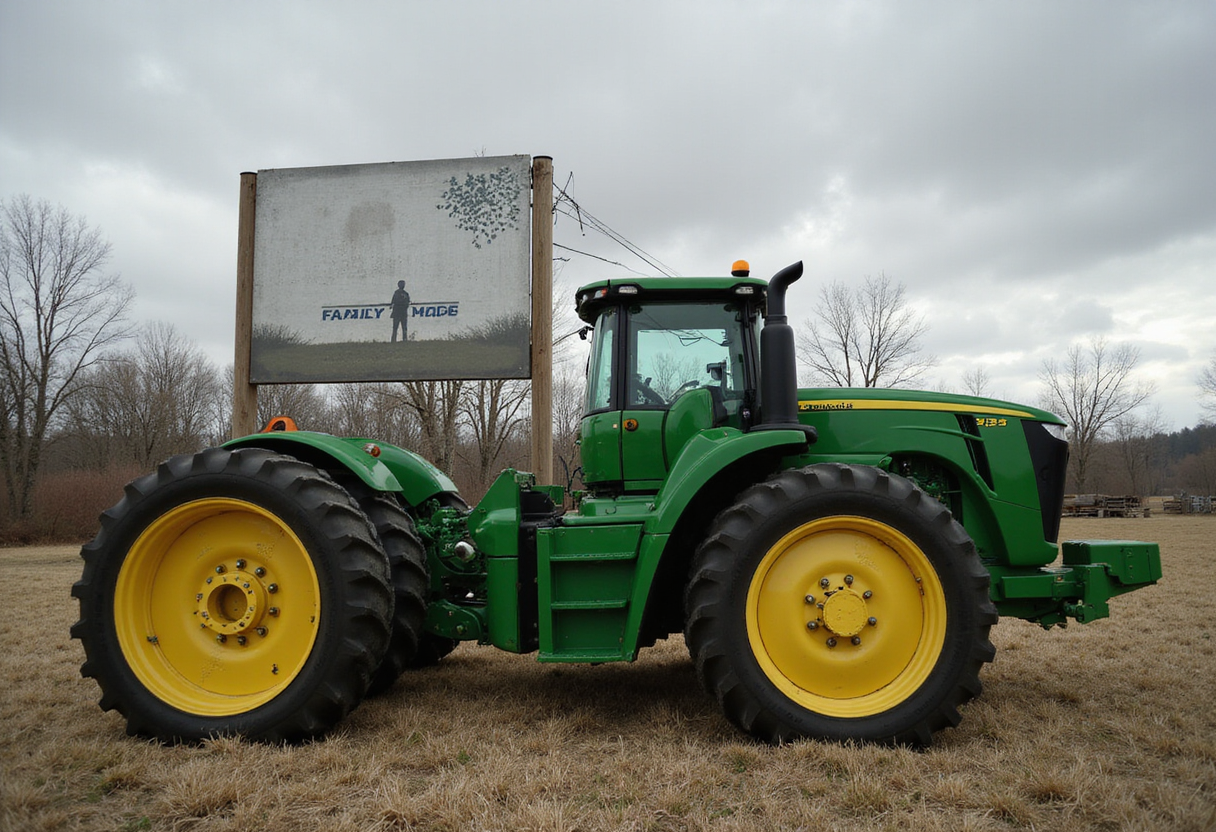
The Federal Trade Commission is warning that scammers are impersonating farm equipment businesses, a fraud vector aimed directly at growers and rural buyers who purchase machinery, parts and services at a distance.
The FTC alert, picked up by American Farm Publications, identifies a scheme in which fraudsters pose as legitimate equipment dealers and suppliers. The core threat for farm operators is straightforward: a purchase that looks like a routine acquisition of tractors, implements or replacement parts can end with money wired to a fake business and no delivery.
The warning lands in a segment of the farm economy where transactions increasingly happen online and by phone, without the face-to-face contact that once served as a built-in verification step. Equipment remains one of the largest capital line items on any operation's books, and a single fraudulent transaction on a big-ticket machine can represent a meaningful share of a farm's annual machinery budget.
For growers, the practical exposure comes through several channels. Scammers can copy the branding, listings and contact formats of real dealerships, making fraudulent offers appear in the same places — search results, marketplaces, emailed quotes — where legitimate used-equipment deals normally surface. The impersonation tactic matters because it attacks the trust a buyer extends to a known business name rather than to an obvious stranger.
The FTC's warning puts the burden of verification back on the buyer. The standard precautions the agency promotes across impersonation scams apply here: confirm the business exists independently of the contact that approached you, use a phone number you sourced yourself rather than one supplied in the solicitation, and treat pressure for fast payment — particularly wire transfer or prepaid channels that offer little recourse — as a red flag.
Farm business operators can also take structural steps. Verifying a dealer's physical address, checking registration and licensing status, and cross-referencing with manufacturer-authorized dealer lists where applicable all reduce the chance of engaging a fake operation. For cooperatives and multi-location operations, making purchasing staff aware of the FTC warning is a low-cost control against a fraud that relies on one unverified transaction slipping through.
The FTC's broader impersonation enforcement has targeted fraud across many sectors; the fact that the agency is now flagging farm equipment businesses specifically signals that agricultural buyers are an active target population, not a peripheral one. Rural commercial buyers have historically reported fraud at lower rates than the general population, which regulators have long read as underreporting rather than absence of victimization — leaving the scale of the farm equipment variant difficult to gauge until complaints accumulate.
Growers who encounter a suspicious equipment seller can report it to the FTC through its complaint system, the same channel that feeds the agency's fraud surveillance and determines whether a given scheme draws enforcement attention.
The FTC has not, in the material available, quantified losses or identified specific dealerships whose names were misused — so the warning should be read as a precautionary alert rather than a measure of documented damage. Whether the agency follows with enforcement actions or consumer-loss data tied to equipment impersonation will show how deep the scheme runs into the farm input and machinery market.
via Google News: Farm equipment (Source)
More from Olivia Hart
Show full bio
News editor covering media and advertising at Agribusiness Wire.
137 articles