Lot No. LOT-6044 · offered September 29, 2026
Seeds, Crop Protection & FertilizerLot sheet
Fine-Tuned Fertilizer Use Offers Corn Growers a Path to Lower Input Bills
Farm Progress urges corn growers to fine-tune fertilizer programs — matching rates, timing and placement to crop need — as a direct route to cutting per-acre input costs without sacrificing yield.
Market notes
- Farm Progress recommends fine-tuning fertilizer rates, timing and placement rather than applying routine blends.
- Soil testing and crediting existing nutrients are positioned as the foundation for cutting fertilizer spend without yield loss.
- The guidance targets corn growers' largest variable expense as margins tighten.
- Careful timing and placement of nitrogen reduce losses and improve uptake efficiency, lowering the volume needed per bushel.
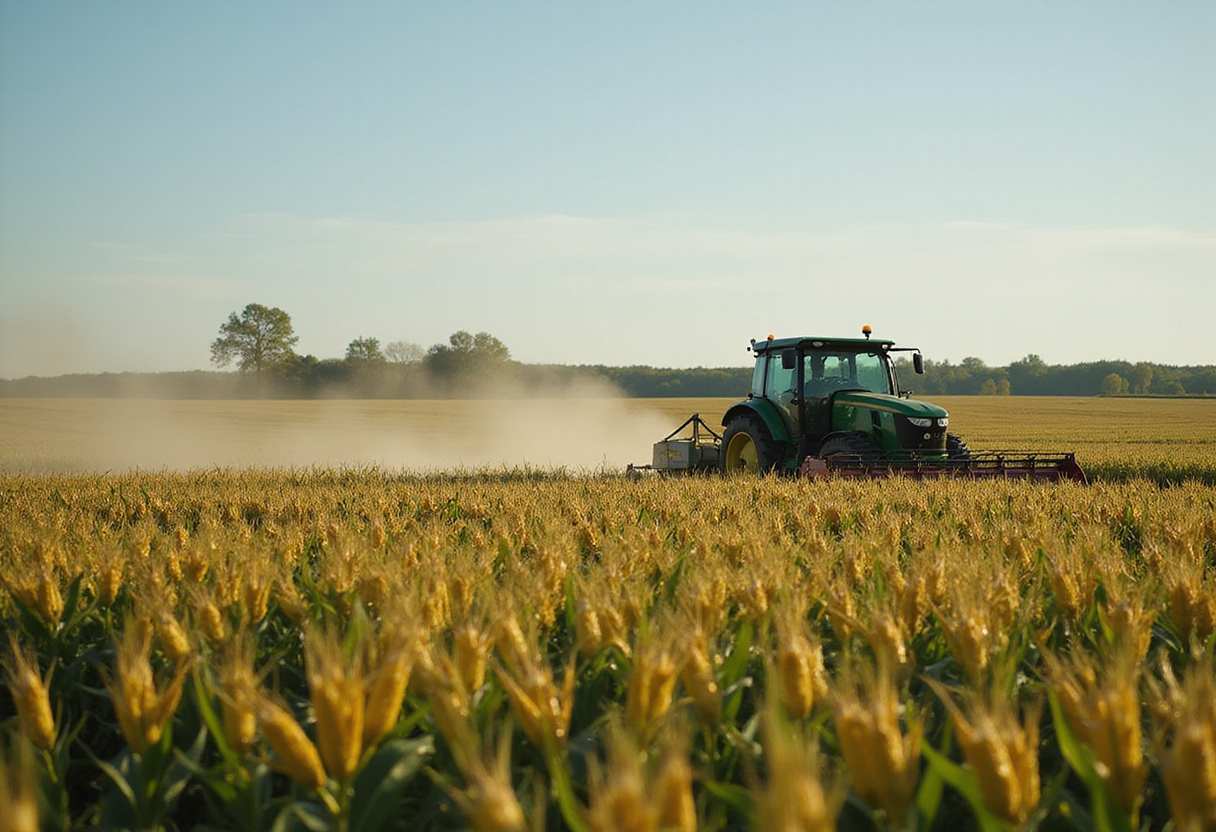
Farm Progress is urging corn producers to look hard at their fertilizer programs, arguing that fine-tuning nutrient applications — not simply cutting them — offers one of the most direct routes to reducing per-acre input costs without sacrificing yield.
The recommendation lands as fertilizer remains the largest single variable expense on most corn acres. For growers weighing tight margins against volatile nitrogen, phosphate and potash prices, the difference between a blanket nutrient program and a calibrated one can decide whether a field finishes the year in the black.
The core of the approach is straightforward: match applied nutrients to what the crop actually needs, where it needs it, and when it can use it. That means scrutinizing application rates, timing and placement rather than defaulting to routine blends carried over from previous seasons. Fields differ in soil test levels, residue loads, manure history and yield potential, and a program tuned to those differences spends fewer dollars per bushel produced.
Soil testing sits at the foundation of that process. Without current test data, growers are either over-applying nutrients the soil already supplies in sufficient quantity or under-applying where deficiencies quietly cap yield. Either error carries a cost — one in wasted input spend, the other in lost revenue from bushels that never make it to the combine.
Timing and placement matter as much as rate. Nitrogen applied closer to the period of peak crop uptake is less vulnerable to loss through leaching and volatilization, meaning more of what a grower pays for actually reaches the plant. Placement strategies that put nutrients in the root zone, rather than broadcasting them across the full field surface, can improve uptake efficiency and reduce the total volume needed to hit a yield target.
Manure and credit sources deserve a full accounting in the same ledger. Nutrients already present in the soil profile, supplied by legumes in rotation or delivered through manure applications, reduce what needs to come out of the bag. Growers who skip those credits pay twice — once for the nutrient already on the field and again for the commercial product layered on top.
The economic logic sharpens as margins compress. When corn prices soften, the cost of inefficiency grows relative to revenue, and every dollar of fertilizer that fails to convert into grain weighs more heavily on the bottom line. Conversely, indiscriminate cuts to nutrient programs carry their own risk: saving on inputs only to give up yield trades one margin problem for another.
That balance — trimming waste without trimming productivity — is the distinction the piece draws for growers planning their input purchases. Fine-tuning is presented not as a retreat from fertilization but as a discipline: verify what the soil holds, credit what is already there, apply what the crop needs when it can use it, and place it where roots can find it.
For the coming season, growers who audit their nutrient programs field by field — rather than field by habit — position themselves to hold yield while lowering their cost of production, a margin play that requires no new equipment beyond a soil probe, a current test report and a willingness to question last year's blend.
via Google News: Fertilizer markets (Source)
More from Nathan Brooks
Show full bio
Staff writer covering marketplaces and e-commerce at Agribusiness Wire.
173 articles
Also in the yard
- High Fertilizer Prices Put Fertilizer Application Rates Back on the Table
- Precision Agriculture Tools Emerge as Answer to Fertilizer Shortages
- Fertilizer Prices Squeeze Corn Farmers as Planting Season Starts
- US Fertilizer Prices Rise Again Ahead of Fall Application
- Fertilizer Prices Surge Ahead of Critical Planting Season