Lot No. LOT-8492 · offered September 26, 2026
Seeds, Crop Protection & FertilizerLot sheet
Farm Economists Warn Fertilizer Prices May Keep Climbing
An agricultural economist warns fertilizer prices could climb further, raising break-evens for row-crop growers still making fall and pre-pay input decisions.
Market notes
- An agricultural economist warns fertilizer prices could move higher still.
- Fertilizer ranks among the largest variable input expenses for row-crop producers, so price moves shift break-even economics.
- The warning is a forecast, not a harvested result; actual price direction will show up in retail surveys and cooperative price sheets.
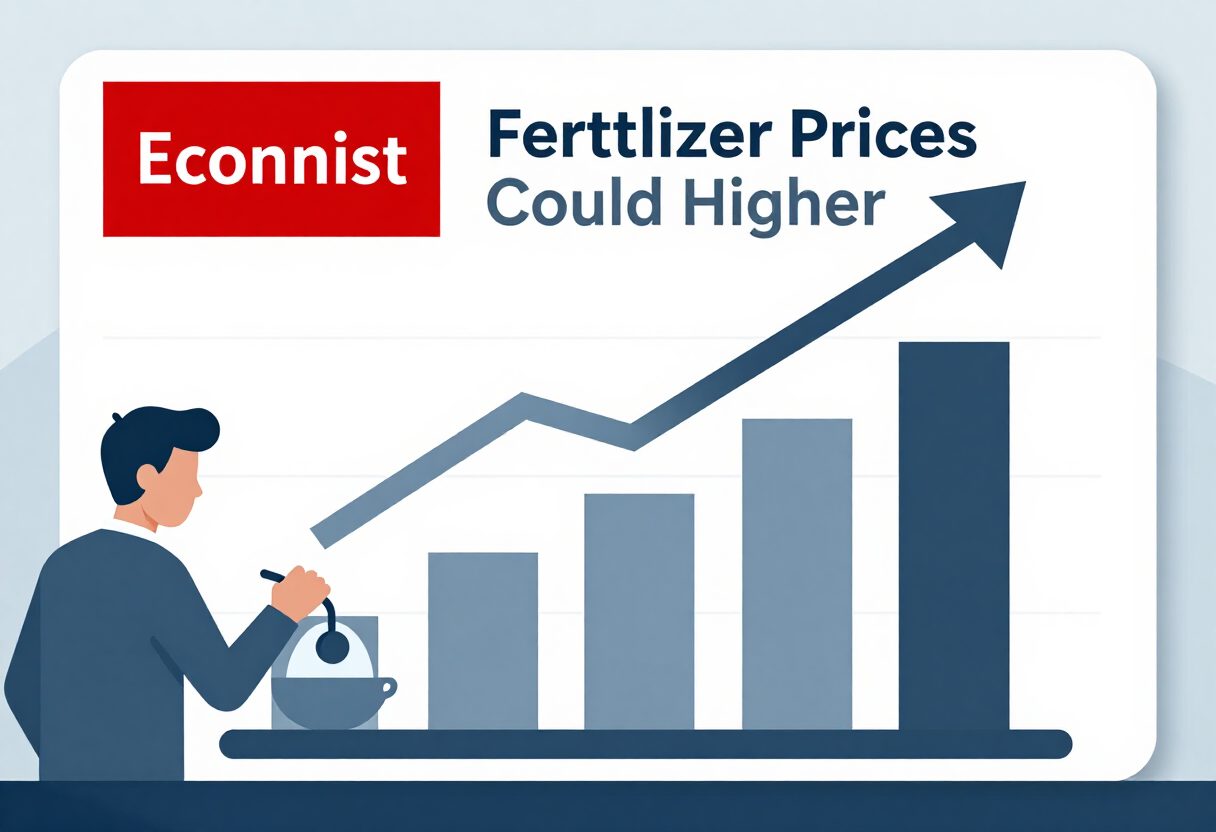
An agricultural economist is warning growers that fertilizer prices, already a top line item on crop budgets, could move higher still — a signal that farmers locking in input purchases for the coming season may face thinner margins even before seed and chemical costs enter the equation.
The caution comes from an agricultural economist cited in a regional radio report, and it lands at a point in the cropping cycle when growers typically make fall application and pre-pay decisions. For row-crop producers, fertilizer routinely ranks as the single largest variable input expense, so even a modest percentage move in nitrogen, phosphate, or potash prices shifts break-even economics across whole rotations.
The economist's warning is a directional signal rather than a harvested result. It belongs in the same category as other forward-looking indicators — condition reports, pre-plant intentions, futures curves — that growers and their lenders treat as planning inputs, not settled facts. How far prices actually run, and for how long, will show up in retail price surveys and cooperative price sheets over the coming reporting windows.
For farmers, the practical implications are straightforward. Higher fertilizer costs raise the break-even price on every acre, compressing margins at a time when commodity prices themselves have been under pressure. Growers who priced fertilizer early, or who negotiated volume discounts through cooperatives, enter the season with a cost basis advantage over neighbors still holding open positions. Those who wait face the risk the economist flags: paying more for the same agronomic program.
Input makers and retailers stand on the other side of the ledger. Sustained upward price movement supports manufacturer margins, but it also tests demand elasticity — at some price point, growers cut application rates, switch nutrient sources, or skip maintenance applications entirely, which eventually feeds back into yield potential and, in turn, into the following year's demand.
The stakes extend beyond the farm gate. Fertilizer pricing is a global market shaped by energy costs, trade flows, and currency movements, and U.S. growers buy into that market whether or not they follow it. Any additional upside pressure filters through distribution chains to the retail counter, where the farmer ultimately absorbs it in the per-acre cost of production.
Lenders and agronomists will be watching the same indicators. Elevated input costs change how operating lines are sized, how crop insurance guarantees stack against break-evens, and how aggressively growers commit to fixed-rate nutrient programs versus split applications that preserve optionality.
What the economist's forecast does not do is guarantee the direction of the market. Price warnings from analysts have missed before, both high and low, and growers weigh them against their own basis levels, storage positions, and cash-flow windows. The disciplined move, ag economists generally advise, is to price a portion of needs rather than bet the full program on a single market view.
The forward question now is whether the warned-of increase materializes in retail pricing over the next buying window, and how growers respond — with early purchasing, adjusted application rates, or a wait-and-see posture that leaves their 2025 cost structure exposed.
via Google News: Fertilizer markets (Source)
More from Marcus Bennett
Show full bio
Senior reporter covering marketplaces and e-commerce at Agribusiness Wire.
127 articles