Lot No. LOT-4517 · offered November 2, 2026
Agricultural PolicyLot sheet
Farm Bill Stalls in Senate as SNAP Fight Splits Rural-Urban Coalition
The 2018 Farm Bill expired Oct. 1, 2026, with no replacement. SNAP cuts, party-line committee votes and $100 billion in ad-hoc farm aid mark a coalition under strain.
Market notes
- The 2018 Farm Bill expired Oct. 1, 2026; a House version passed, and the Senate bill awaits a floor vote after a party-line committee approval in September.
- SNAP made up about three quarters of the 2018 Farm Bill's $428 billion in planned expenditures.
- Ad-hoc disaster and economic assistance has totaled more than $100 billion over roughly 10 years, including $8 billion for high diesel prices.
- The 2013 House floor defeat was the first for a farm bill since 1962.
- The Senate needs 60 votes to pass its farm bill version.
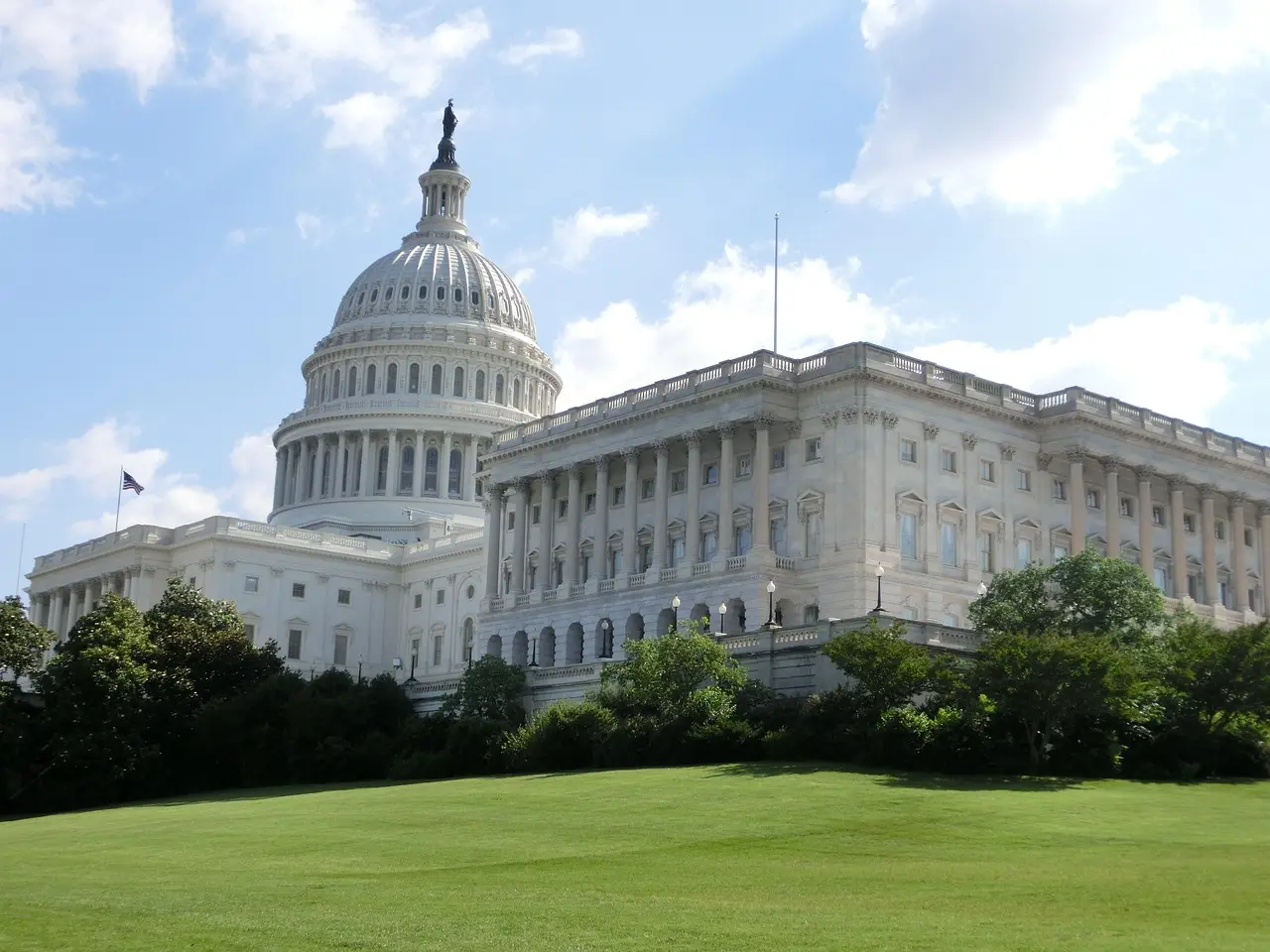
The 2018 Farm Bill expired on Oct. 1, 2026, and Congress still has no replacement — with a House-passed version waiting on a Senate that needed a party-line committee vote just to move the bill forward.
The Senate Agriculture Committee cleared its draft in September on a Republican majority, after Democrats' requested changes failed. The bill now awaits a floor vote, where it will need 60 votes — and likely compromise neither party has yet shown. SNAP funding fights and efforts to delay changes from last year's One Big Beautiful Bill Act stalled the committee in August. After a tense hearing, Congress recessed for a month without moving a bill, and both parties blamed the other.
Since 1933, Congress has passed a farm bill roughly every five years. The current bill carries 12 titles, each authorizing dozens to hundreds of federal programs, grants and initiatives, from forestry to farm loans.
What broke the coalition?
For decades, farm bills survived on a balancing act that crossed party lines. Mike Stranz, vice president of advocacy at the National Farmers Union and a House Agriculture Committee staffer from 2014 to 2020, said the old divides were regional, not partisan.
"Over the years, farm bills have been primarily split on regional differences, or by crop, or where a particular part of agriculture is headed versus another, and that oftentimes has not been along party lines," Stranz said. "It might be far north versus the South, or the Corn Belt versus everybody else, or urban versus rural."
Congress bridged those divides by adding stakeholders, he said: "Bringing in nutrition, bringing in conservation, bringing in any number of other topics from energy to forestry to biotechnology and emerging specialty crops — that gave it more stakeholders, gave it more support, and that's how it got done."
The pivotal addition came in 1973, when Congress folded SNAP into the bill, tying farm policy to the dinner table. That math worked for decades. It doesn't now. "In the last few cycles, it's focused mainly on subtraction rather than addition," Stranz said.
The arithmetic explains the strain. In the 2018 Farm Bill, SNAP accounted for about three quarters of the bill's $428 billion in planned expenditures.
'Political dynamite'
Jonathan Coppess, an agriculture law and policy expert at the University of Illinois Urbana-Champaign, traces the break to 2013. "For the first time since 1962, the farm bill got defeated on the House floor in 2013. So that was the first break," said Coppess, who served as counsel to the Senate Agriculture Committee from 2011 to 2013 and advised former Nebraska Sen. Ben Nelson on agriculture policy in 2006.
A bill was completed in 2014. The 2018 Farm Bill faced similar struggles after the House Agriculture Committee attempted to cut SNAP funding. In 2023, lawmakers renewed the 2018 bill with few changes after more disagreements over the program.
"Once Republicans had the trifecta — the presidency and both chambers of Congress — then they used the reconciliation budget procedures to do the cut to SNAP and a boost in farm payments," Coppess said. That happened in HR1, the One Big Beautiful Bill Act, which also left "orphan" programs awaiting reappropriation in the new farm bill.
The committee reached a partial compromise to delay benefit cost-sharing for states with high SNAP error rates, but Democrats still want to reverse more of HR1's cuts. Coppess said rural development and research funding are now "held hostage" by that fight and the broader budget process.
"What really happens is we force one side to take from somebody else — from another group. That's just political dynamite," he said. "It blows up a coalition."
Not everyone accepts the fractured-coalition framing. Jordan Dux, a policy analyst for the Nebraska Farm Bureau, noted that some House Democrats still voted for the bill. "I wouldn't say the coalition is fractured," Dux said. An amendment package passed unanimously in committee, and lawmakers are collaborating on year-round 15% ethanol gasoline and on reevaluating state animal welfare standards such as California's Proposition 12.
What does the delay cost farmers?
For growers, the stakes are concrete. Tariffs and rising diesel prices are squeezing margins, yet the draft contains no major safety-net reform, Stranz said. He pointed to roughly 10 years of ad-hoc disaster and economic assistance totaling more than $100 billion, including $8 billion President Donald Trump recently set aside to offset high diesel prices.
"We need to have a farm bill that tackles those bigger problems, while also building out a stronger local and regional food system, while also being sure that corporate monopolies are reined in and don't have undue market power, while also making sure that those who need the most help having access to food can do so, rather than cutting from it," Stranz said.
Coppess doubts the current draft delivers any of that. "The bottom line is nothing really changes for farmers going forward — at least through 2031," he said.
The midterms will shape the endgame. Dux said Republicans likely want to finish the bill; if Democrats take Congress, he guesses the GOP may compromise more — though either party could also table it.
"I think ultimately, you will need some bipartisanship. You will need some give and take on both sides," Dux said. The Senate must pass its version before both chambers can agree on a final bill.
via Google News: Farm bill and ag policy (Source)
More from Olivia Hart
Show full bio
News editor covering technology and product news in Agribusiness coverage for industry professionals at Agribusiness Wire.
488 articles
Also in the yard
- Farm Bill Reauthorization Drifts Past Midterms as Senate Opens Talks
- Senate Committee Sends 2026 Farm Bill to Floor on Party-Line Vote
- Farm Bill Expires Sept. 30 as Congress Chases Year-End Deal
- Senate Ag Committee Advances Farm Bill 2.0 in 12-11 Party-Line Vote
- Senate Ag Committee Advances Farm Bill on Party-Line Vote