Lot No. LOT-7314 · offered September 26, 2026
Crop EconomicsLot sheet
Drought, Heat and Localized Rains Squeeze Texas Summer Crops
Texas crops face a split weather picture as summer ends: drought in some areas, excess rain in others, and consecutive triple-digit days stressing fields and raising concerns for next season.
Market notes
- Some Texas crops are receiving too little rain while others receive too much as summer ends.
- Consecutive days of triple-digit temperatures are stressing summer crops.
- The heat and uneven moisture are raising concerns for next season.
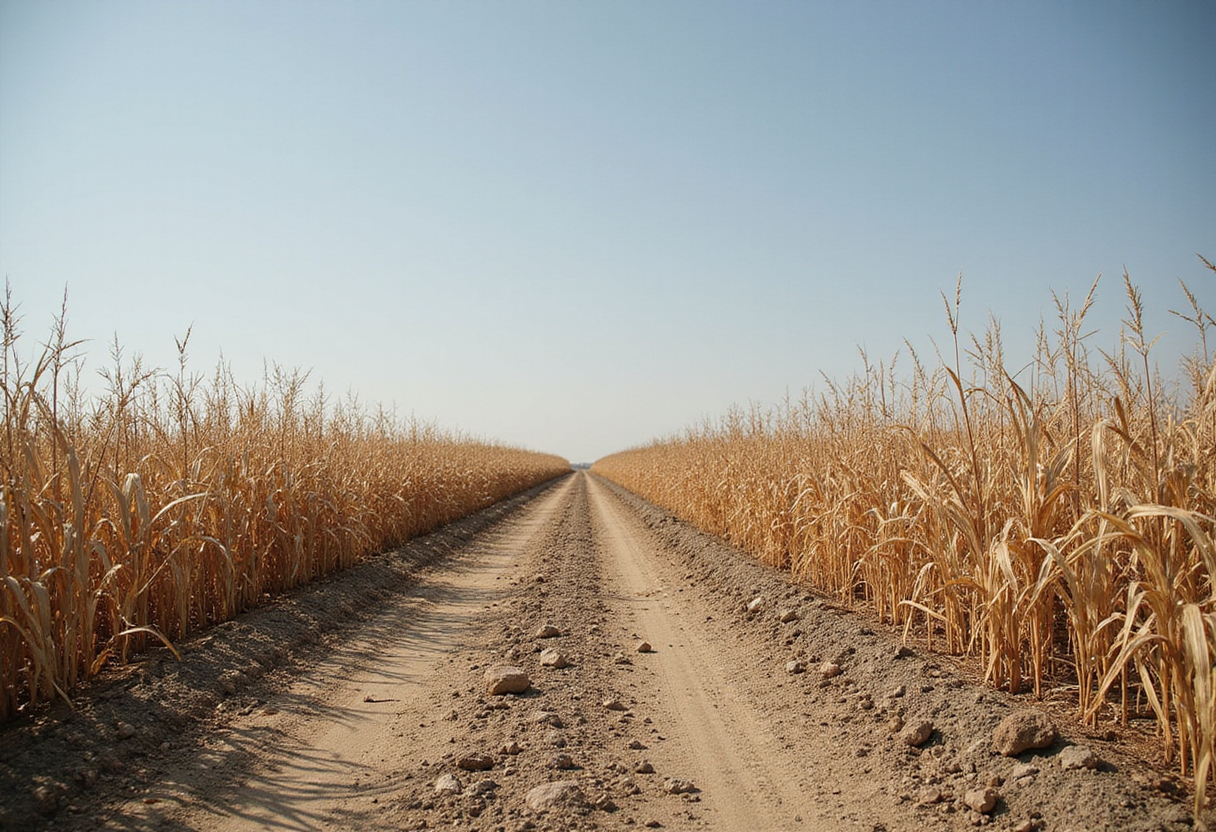
Texas growers are closing out summer with a split weather picture: some crops are getting too little rain, others too much, and consecutive days of triple-digit temperatures are stacking stress on top of the moisture imbalance.
The state's late-summer condition, as reported by field observers, comes down to a simple but damaging formula. Where drought dominates, crops are running short on moisture during the stretch when summer crops need it most. Where rains have fallen, the problem inverts — excess water is the stressor. Both scenarios share one complication: heat, day after day, at triple-digit readings.
That combination matters for more than crop condition scores. Heat and moisture stress at this stage of the season feed directly into yield outcomes, and yield outcomes feed directly into farm margins. For growers weighing input decisions — irrigation water, late-season treatments, harvest logistics — the difference between a field that got the rain and one that missed it is the difference between two very different cost-and-return calculations on the same operation.
Consecutive triple-digit days carry a second layer of risk that extends past this harvest. Observers report the heat and moisture pattern is raising concerns for next season. Soils going into fall with depleted moisture, or saturated in spots, shape the agronomic starting point for planting decisions months from now. Growers and their lenders will be watching recharge — or the lack of it — closely between now and planting windows.
It is worth keeping the reporting straight on what this is and is not. These are in-season condition reports, not harvested results. They describe crop stress as observed in the field during the closing weeks of summer; they are not final yield counts or production estimates. The gap between a stressed crop in August and what actually comes off the field can be wide, and condition reports historically overstate or understate final outcomes depending on how the last weeks of the season treat the crop.
For Texas agribusiness, the practical read is unevenness. A state-level summary that averages drought and excess moisture into one line hides the operational reality: neighboring counties, and in some cases neighboring fields, are facing opposite problems. Input suppliers, grain buyers and insurers pricing risk across the state will see the effects show up differently by region and by crop rather than as a uniform hit.
The stress on summer crops is the immediate concern. The concern for next season is the longer one, and it rests on how soil moisture and temperature patterns resolve over the transition into fall. Growers, cooperatives and agency field staff will be tracking whether late-season rains arrive where they are needed, whether saturated areas drain in time, and whether the heat breaks before it compounds further damage.
Until then, the situation across Texas remains what the field reports describe: too little rain in some places, too much in others, and heat pressing on all of it — a pattern whose full cost will show up in the harvest data, and in next season's planning, rather than in the current condition scores.
via Farm Progress (Source)
More from Olivia Hart
Show full bio
News editor covering media and advertising at Agribusiness Wire.
137 articles
Also in the yard
- USDA Climate Hub Warns Harvest Delays Could Stretch Into Months
- Heavy Rains Stall Northwest Missouri Harvest, Agronomist Reports Grain Quality Damage
- Dry Windows Open Corn Belt Harvest; Plains Rains Bring Relief
- Wet Fields Keep Ohio Harvest Combines Parked
- Remnant Hurricane Polo Moisture to Dump 1–4 Inches Across Four Corners