Lot No. LOT-9902 · offered November 12, 2026
Precision Agriculture & AgTechLot sheet
Cargill CISO: 155,000 Trained Employees Are Core Cyber Defense
Cargill CISO Brian Cincera says informed employees across the company's 155,000-strong workforce are among the strongest defenses against evolving cyber threats to agrifood.
Market notes
- Cargill employs roughly 155,000 people, whom CISO Brian Cincera calls a core cyber defense.
- Cargill was a founding member of the Food and Ag-ISAC threat-intelligence group in 2023.
- Brian Cincera joined Cargill in 2024 after nearly 20 years at Pfizer.
- Defense layers include phishing simulations, preparedness exercises and AI-assisted detection.
- Cargill says connected agrifood systems face threats to physical operations and supply chains, not just data.
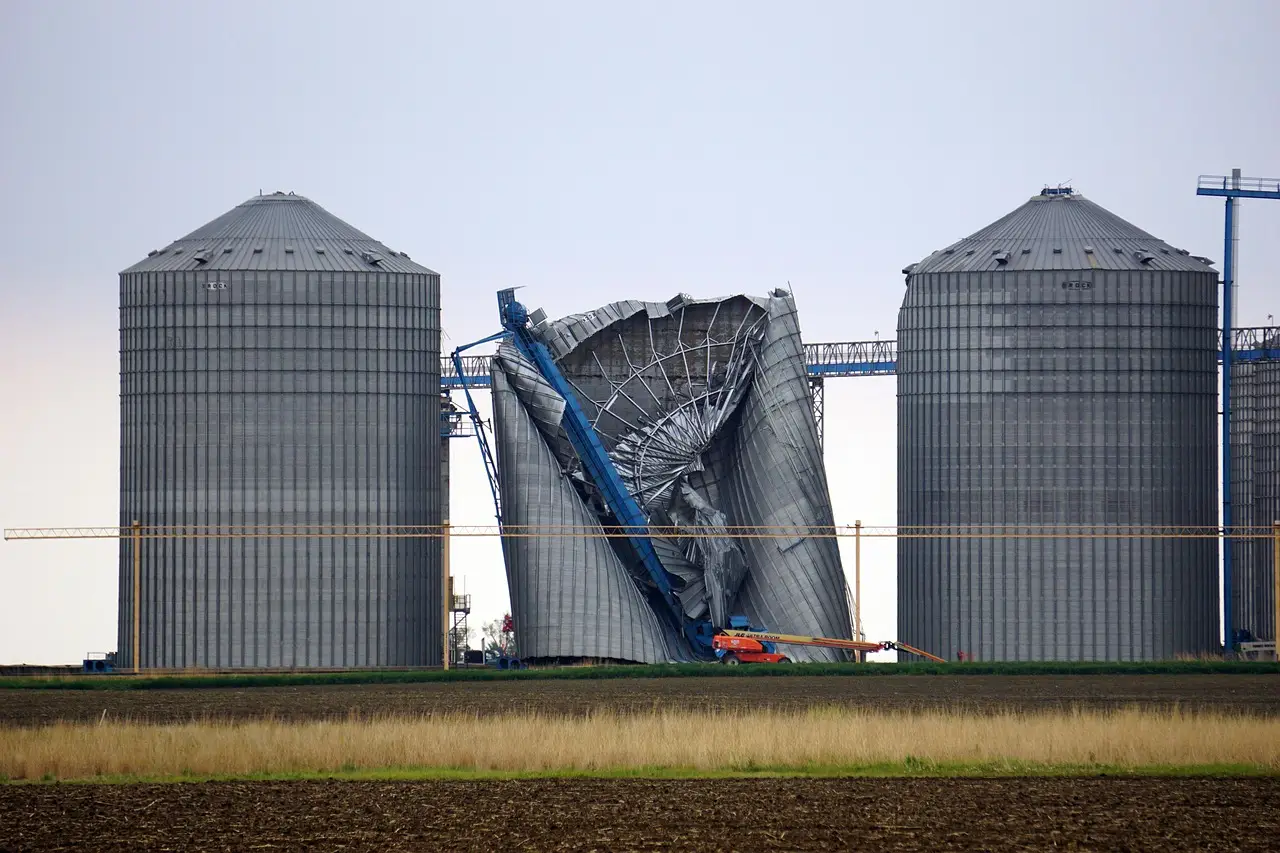
Cargill counts roughly 155,000 employees as a frontline cyber defense, and chief information security officer Brian Cincera says one person reporting suspicious activity can protect everyone around them.
"Technology will keep evolving, but informed people who know what to look for remain one of our most powerful defenses," Cincera told AgFunderNews in an interview on how the Minneapolis-based agribusiness approaches cybersecurity.
Cincera, who spent nearly 20 years at Pfizer before joining Cargill in 2024, laid out a strategy built on prevention, fast detection and decisive response — not on the assumption that every attack can be stopped.
How does Cargill structure its defense?
Cybersecurity starts with the business strategy, Cincera said. Cargill identifies the operations, relationships and outcomes most critical to the company and the global food system, then fits security processes and technology around them.
The layers include:
- continuous monitoring of critical operations, people and processes;
- preparedness exercises;
- employee education;
- phishing simulations;
- advanced AI to strengthen prevention, accelerate detection and improve response.
"Advanced AI enables adversaries to create more convincing and scalable attacks, but it also gives defenders new ways to prevent, detect and respond," Cincera said.
When incidents occur, priorities are to contain the threat, protect people, operations and customers, assess impact and restore affected capabilities safely. Cargill declines to discuss specific threats or defense details for security reasons.
Why did Cargill help found the Food and Ag-ISAC?
Cargill was a founding member of the threat-intelligence group the Food and Ag-ISAC in 2023. Cincera said the move reflects how interconnected the food and agriculture supply chain is: an incident hitting one organization can ripple through suppliers, manufacturers and ultimately consumers.
The ISAC serves as a forum for sharing pre-competitive threat intelligence, indicators and security practices. "No single organization can see every threat," Cincera said. "Sharing knowledge helps each participant become a harder target and better prepared to respond."
How serious is the threat to agrifood?
Cincera rated the threat as serious enough that no agrifood company can treat cybersecurity as solely an IT issue, but not apocalyptic. The security investments companies are making are what keep the threat in check, he said.
As agrifood becomes more connected through AI, automation and remotely managed systems, cyber incidents can hit physical operations, production and supply chains — not just information.
"The most important question isn't whether the threat is a seven, eight or nine. It's whether we're taking action now," Cincera said.
What should agtech startups do?
Startups should begin with the business and operational need, not the technology, Cincera advised. Developers must understand the problem and the data and systems their tools will touch, then design for safety on the assumption that failures, misuse or compromise can happen.
Security, privacy and responsible data practices belong at the start, not the end, of product development. Because new tools interact with legacy systems and physical operations in agriculture, operators cannot simply stop for a software update.
If a digital tool can influence how food is produced, processed or moved, cybersecurity must be treated as part of product quality and operational safety, not an optional technical feature, Cincera said.
What keeps him up at night is the speed of change in the threat landscape and the potential for a digital incident to carry real-world consequences across the food system. His confidence rests on company-wide commitment: safety and responsibility woven into culture, plus ongoing education that makes employees effective at detecting and reporting suspicious activity.
via cargill.com (Original)
More from Grace Kim
Show full bio
Correspondent covering people, launches and day-to-day practice in Agribusiness coverage for industry professionals at Agribusiness Wire.
507 articles
Also in the yard
- Ransomware Attacks on Food and Ag Sector Jump 62% Through July
- Researchers Decode Fungal Chemistry, Pointing to Greener Crop Protection
- Research review reframes fungal infection tactics as crop protection roadmap
- Fungal infection study flagged via EurekAlert crop protection release
- Ransomware Attacks on Food and Agriculture Doubled to 265 in 2025