Lot No. LOT-9936 · offered September 29, 2026
Precision Agriculture & AgTechLot sheet
AEM Lays Out the Business Case for Precision Agriculture
AEM argues precision agriculture's value shows up in whole-farm productivity gains, not single features, as equipment makers court capital-strapped growers with payback math.
Market notes
- AEM published "The Business Case for Precision Agriculture: Productivity Gains Add Up," arguing productivity gains compound across whole-farm operations.
- The analysis comes from the trade group representing major equipment manufacturers, whose members sell the precision hardware in question.
- AEM has previously partnered on research measuring precision agriculture's aggregate impact on efficiency and resource use, used in policy discussions.
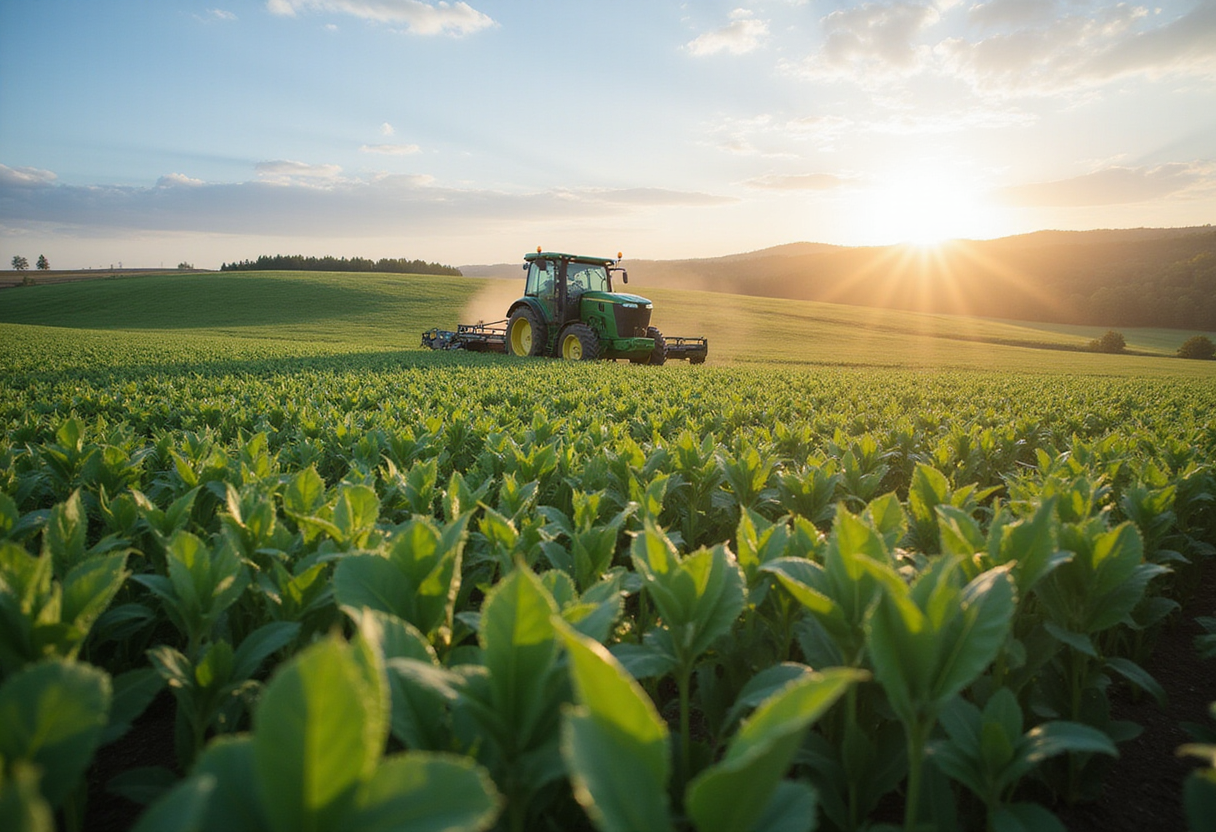
The Association of Equipment Manufacturers (AEM) has published an analysis making the business case for precision agriculture, arguing that productivity gains from the technology stack add up across whole-farm operations rather than in isolated field trials.
The piece, titled "The Business Case for Precision Agriculture: Productivity Gains Add Up," frames adoption decisions for growers in direct financial terms. Its core argument: while no single precision tool delivers a dramatic margin shift on its own, incremental gains in input placement, machine efficiency and yield consistency compound when measured across every acre and every pass.
For input budgeting, that framing matters. Fertilizer, seed and crop protection remain the largest variable costs for most row-crop operations, and precision systems — guidance, variable-rate application, section control and yield monitoring — target those lines directly. AEM's argument runs that even single-digit percentage reductions in input use per acre translate into meaningful dollar amounts at scale, particularly for large-acreage grain operations where thin per-acre margins magnify the effect of small efficiency shifts.
The analysis comes from the trade group representing the major equipment manufacturers, so its productivity claims serve an obvious commercial interest: AEM's membership includes the OEMs selling the displays, guidance hardware and application controllers in question. Growers and their lenders evaluating the case will want to weigh that origin — the piece functions as both industry advocacy and an adoption framework, and the underlying figures deserve the same scrutiny applied to any vendor-supplied return-on-investment calculation.
AEM is not new to quantifying precision agriculture's footprint. The organization has previously partnered on research measuring the technology's aggregate impact on production efficiency and resource use, work it has used in policy discussions around farm bill programs, conservation incentives and rural infrastructure such as broadband deployment — a recurring constraint on telematics-dependent systems in rural counties.
The economic logic AEM lays out aligns with what farm financial advisers have tracked since commodity prices retreated from their peaks: equipment purchases now compete harder for capital against land, inputs and debt service. A precision investment that cannot show a clear payback window tends to lose those internal capital allocation debates, which is why the industry's messaging has shifted toward whole-farm productivity accounting rather than feature-by-feature comparisons.
For growers weighing upgrades amid elevated machinery prices and still-high interest rates on operating credit, the practical takeaway from AEM's case is procedural rather than promotional: benchmark current input costs per acre, identify which passes offer the largest efficiency gap, and demand payback math tied to their own field history before committing capital.
AEM indicates it will continue building out this business-case material as part of its broader effort to document precision agriculture's contribution to farm-level productivity and sustainability metrics used in policy and marketplace conversations.
via Google News: Precision agriculture (Source)
More from Olivia Hart
Show full bio
News editor covering media and advertising at Agribusiness Wire.
137 articles