Lot No. LOT-1878 · offered September 30, 2026
Commodity MarketsLot sheet
Acreage Competition Could Prop Up Grain Prices Into 2027
Analysts see competition for limited planted acres, not demand growth, holding a floor under grain prices through the 2026 crop cycle and into 2027.
Market notes
- Brownfield Ag News reports that an acreage battle could support grain prices into 2027.
- The price-support thesis rests on competition for limited planted acres rather than a demand surge.
- Acreage-driven premiums persist until planting reveals how many acres each crop actually captured.
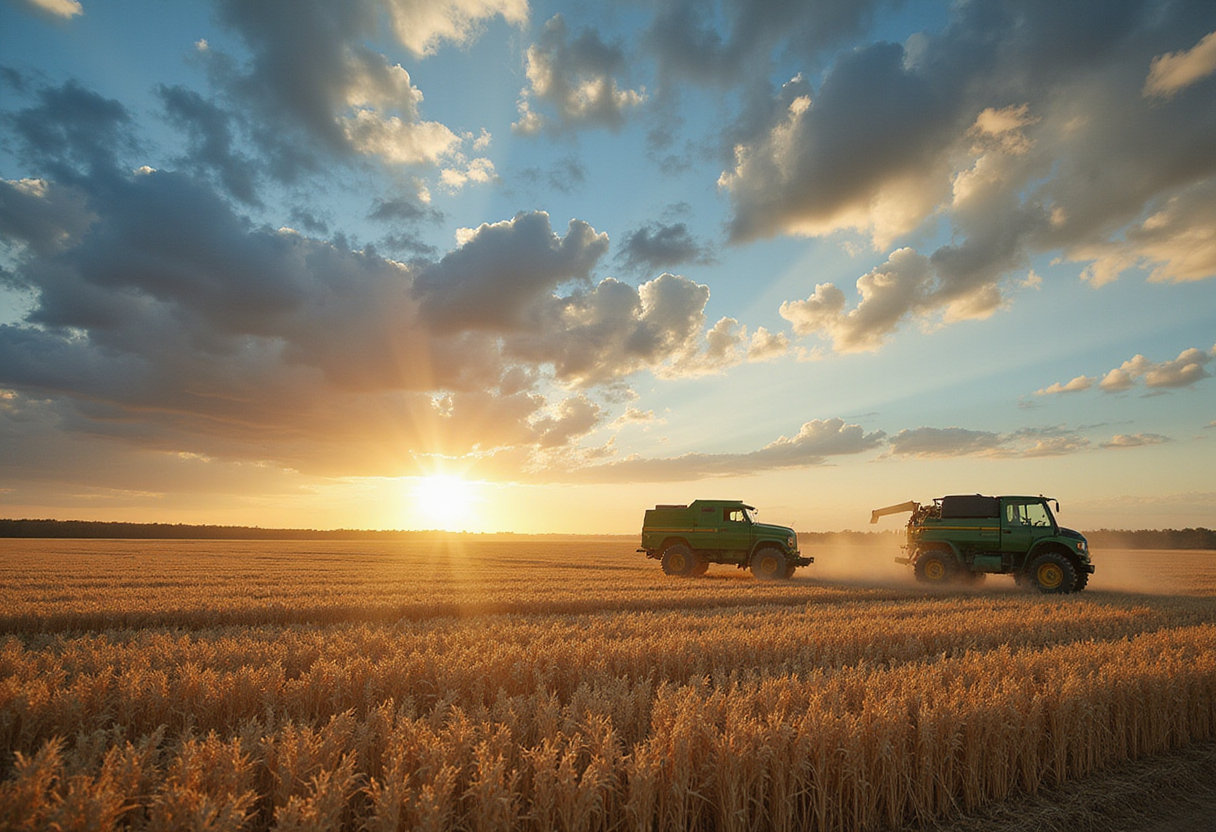
Competition for planted acreage could keep grain prices supported into 2027, according to Brownfield Ag News reporting on the outlook for the coming crop cycles.
The core issue is arithmetic. Every crop needs ground, and the ground is finite. When multiple commodities bid for the same acres at once, the market has to price each one high enough to win its share of the planting pie. That competitive bidding, rather than a supply shock or a demand surge, forms the basis for the price support that analysts see stretching through the 2026 crop year and into 2027.
For row-crop growers, the practical question is which crop pays the most per acre after input costs. Fertilizer, seed, crop protection, fuel and land rents all come out of the same gross revenue, and the spread between corn and soybean returns drives the rotation decisions that ultimately set national planted acreage. When expected margins tighten, producers shift acres toward whichever crop offers the better return, and the market responds by bidding prices back up on the crop that is losing ground.
That dynamic is the mechanism behind the 2027 price outlook. If acreage has to be rationed among competing crops, futures prices carry a risk premium that reflects the uncertainty over how many acres each crop will capture. The premium tends to persist until planters roll and the market can count what actually went into the ground.
Condition reports and pre-plant expectations should be read separately from harvested results, and that distinction matters for how growers use this outlook. An acreage-driven price thesis is a forecast, not a bin measurement. It depends on planting intentions, weather during the growing season, and final harvested acreage — each of which can move actual supply away from what the balance sheet assumed in the winter months.
The reporting from Brownfield Ag News frames the acreage battle as a multi-year factor rather than a single-season story. That horizon matters for marketing decisions. Growers pricing new-crop grain face the question of whether the acreage premium is already built into the board or whether it deepens as planting approaches and the fight for ground intensifies.
Input suppliers and grain merchandisers watch the same signals from the other side of the fence. Seed orders, fertilizer programs and basis levels all reflect expectations about the crop mix. When the market signals an acreage battle, input demand shifts with the expected rotation, and basis can widen or narrow at locations that depend on one crop more than another.
For farmers, the takeaway is straightforward. The price support thesis rests on scarcity of acres, not on a demand boom. It holds as long as total planted area stays tight relative to what the market needs across corn, soybeans and competing crops. If acreage expands — through fewer prevent-plant acres, double-cropping, or ground coming back into production — the premium erodes.
The acreage battle narrative gives growers a framework for the next two seasons: watch planted acreage estimates, track the corn-to-soybean price ratio as a rotation signal, and price grain against the possibility that the fight for ground keeps a floor under the market into 2027.
via Google News: Grain prices (Source)
More from Grace Kim
Show full bio
Correspondent covering industry trends and analytics at Agribusiness Wire.
159 articles
Also in the yard
- Grain Rally Lifts U.S. Farm Outlook, But Input Costs Keep Squeeze On
- Harvest Pressure Drags Corn and Soybean Prices Lower
- Analyst Sees Acreage Battle Supporting Grain Prices Into 2027
- Soybeans Lead Broad Grain Selloff That Squeezes U.S. Farm Margins
- Corn, Soybeans and Wheat Surge in Chicago, Lifting Farm Revenue Hopes