Lot No. LOT-9765 · offered November 3, 2026
Agricultural PolicyLot sheet
86% of Producers Expect No Financial Improvement, Agri-Pulse Survey Finds
An Agri-Pulse poll of 170 producers finds 86% expect flat or worse finances, 62% say agriculture is off track, and USDA sets 2025 PLC rates up to $1.29 per bushel.
Market notes
- 86% of 170 producers surveyed expect worse or unchanged finances over 12 months; 62% say agriculture is on the wrong track.
- USDA's Oct. 30 data sets 2025 PLC rates at $1.29/bu wheat, 26 cents/bu corn, 21 cents/bu soybeans; long-grain rice projected at $344 per base acre.
- Trump will end AGOA eligibility for Rwanda and South Africa effective the new year.
- Intoxicating hemp beverages face a Dec. 11 ban unless Congress acts; 63% of surveyed consumers would shift to other THC forms.
- 72% of producers report negative impacts from current U.S. trade policies.
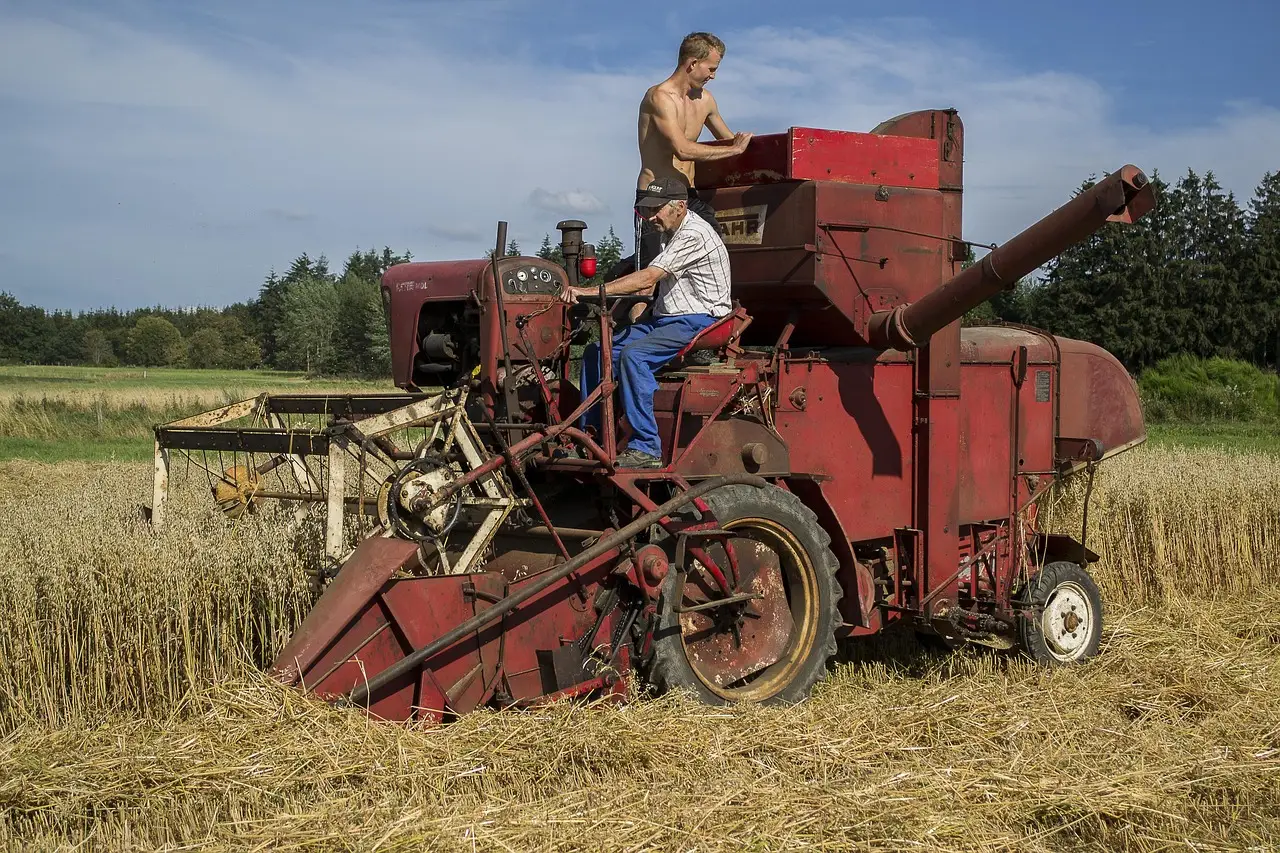
Eighty-six percent of U.S. agricultural producers expect to be in worse financial shape — or no better — over the next 12 months, according to an Agri-Pulse survey completed the day before the midterm elections. The same poll found 62% of respondents believe U.S. agriculture is on the wrong track.
The Agri-Pulse Research Network: The Political Pulse of Agriculture surveyed 170 participants from October through Nov. 1. Sara Wyant, Agri-Pulse founder and publisher, acknowledged the limitations of the sample while standing behind its signal.
"Although this is a relatively small sample of our audience who took time to respond during a busy harvest season, it captured perspectives from all across the country and directionally, underscores how frustrated farm country is going into the midterm elections," Wyant said. She noted the poll did not give the Trump administration the high ratings recorded in prior surveys.
How do producers judge trade policy?
Trade sentiment is sharply negative. Seventy-two percent of respondents say current policies have "somewhat" or "very" negatively impacted them. On President Donald Trump's decision to allow more beef imports from South America to lower consumer prices, 76% call the move "very" or "somewhat" negative.
History offers a caution, though: dissatisfaction with agricultural policy has not previously translated into a collapse of rural backing for the GOP. The open question is whether loyalty to Trump — or its absence — materially shifts the results.
Rural America sits at the center of the electoral map regardless. Ag-heavy regions that helped reelect Trump two years ago and aided Republicans in flipping the Senate and retaining the House will test voter thinking. With the House widely expected to go to the Democrats, forecasters are watching the Senate map closely, with wild cards in Alaska and Michigan. Larry Sabato's Crystal Ball at the University of Virginia and the Cook Political Report with Amy Walter both say the GOP is clearly at risk of losing Senate control.
"After exiling Senate Democrats from red states in 2024, capturing all 50 Senate seats in the 25 states that voted for Trump all three times he was on the ballot, Republicans appear to be in serious jeopardy of squandering the Senate edge they just so recently secured," Crystal Ball wrote on Monday.
Amy Walter offered the closing caveat: "It's worth remembering that a vote cast begrudgingly counts just the same as one cast enthusiastically. It's also possible that polling in red states has overstated the enthusiasm gap and undersold Republican voters by a few points — which could be enough to save GOP candidates even in close races where Democrats have appeared to have a slight edge."
What do new PLC payment rates deliver?
USDA data released Oct. 30 sets 2025 Price Loss Coverage (PLC, a farm-bill program paying growers when national prices fall below reference prices) payment rates at $1.29 per bushel for wheat, $1 for grain sorghum, 70 cents for flaxseed, 26 cents for corn and 21 cents for soybeans. Small chickpeas come in at 8.89 cents per pound, peanuts at 8 cents, seed cotton at 7.92 cents and long-grain rice at 6.8 cents.
A farmdoc daily analysis projects long-grain rice will receive the largest estimated national average payment under either PLC or Agriculture Risk Coverage at $344 per base acre. Temperate japonica rice follows at $288, then peanuts ($244), medium-grain rice ($120) and seed cotton ($119). Corn, wheat and soybeans are projected at $51, $47 and $29 per base acre, respectively.
USA Rice President and CEO Peter Bachmann framed the 2025 payments in policy terms: "The 2025 crop year was incredibly challenging for the rice industry, and we are fortunate to have the nearly 21 percent increase in the PLC reference prices for rice — which represents the most substantial investment in the farm bill programs since the 2002 farm bill when considering all the Title I, crop insurance, and trade investments made in the One Big Beautiful Bill Act."
Who funds the pork fight?
The National Pork Producers Council continues to press its contrast between "real" farmer members and what it calls "tech barons" and animal rights activists defending California's Proposition 12 and similar state livestock restrictions. The stakes are high in Iowa, the top hog-producing state, where voters are electing a governor, a senator and potentially an entirely new congressional delegation.
Late Monday, NPPC promoted a RealClearInvestigations report linking what it described as a $40 million campaign against a congressional fix to Prop 12 to Silicon Valley wealth, animal rights activists and philanthropic organizations behind groups presenting themselves as farmer voices.
Disclosure records sharpen the dispute. Contributions to the American Meat Producers Association and NPPC are not required to be disclosed, but PAC donors are public. The AMP PAC, formed this year, lists 16 contributions in the 2025-26 cycle, none specifically from farmers, per FEC filings. PorkPAC shows nearly 300 donations, including farmers.
"AMP PAC intentionally doesn't ask farmers and ranchers for donations," AMPA President Holly Bice said. "They're already stretched thin, and many are already paying, with no say in the matter, through mandatory checkoff dollars, money that ended up with NPPC … So far, our donors have been individual Americans stepping up to give independent farmers a voice."
What changes for Rwanda and South Africa?
Trump plans to end Rwanda and South Africa's eligibility for the African Growth and Opportunity Act, a duty-free U.S. market access program covering 32 countries including agricultural goods, effective the new year, the Office of the U.S. Trade Representative announced Monday. Congress recently extended AGOA for two years.
U.S. Trade Representative Jamieson Greer said a review found both countries "engaging in practices that are inconsistent with AGOA's eligibility criteria," citing trade and investment barriers, corruption, and threats to U.S. national security and foreign policy interests. USTR also raised human rights and worker rights concerns in Rwanda. Ambassador L. Brent Bozell III called the South Africa removal "a predictable and preventable outcome" on X. South Africa drew pork-industry and congressional criticism in 2024 over sanitary and phytosanitary standards said to restrict market access.
Is the hemp beverage window closing?
Intoxicating hemp beverage companies face a Dec. 11 ban unless Congress intervenes. Crescent Canna CEO and co-founder Joe Gerrity said October may be the first month retail and direct-to-consumer sales surpass distribution, "because distribution is down like 50%" and November orders are drying up. His company's survey of 1,637 consumers found 63% would shift to other THC forms if banned, 23% would drink more alcohol, 87% know a ban could come in December, and 27% are stocking up.
Gerrity called the ban a threat to small businesses and faulted Congress for inaction amid the industry's "possible extinction." He said: "It's dereliction of duty. They all claim to be pro-small business … to be anti-burdensome regulations. They all want personal freedom, and yet here we are knocking on the deadline with no solution and no real guidance from anybody publicly."
With election results, PLC payments and the hemp deadline all landing within weeks, producers will know by mid-December how much of this pessimism translates into policy and cash flow.
via realclearinvestigations.com (Original)
More from Rebecca Stone
Show full bio
Market editor covering people, launches and day-to-day practice in Agribusiness coverage for industry professionals at Agribusiness Wire.
471 articles
Also in the yard
- 62% of Ag Sector Says US Agriculture Headed Wrong Way, Poll Finds
- Yahoo Headline Calls Farm Export Decline 'Most Underappreciated' Story
- Farm Bureau Survey Documents Fertilizer Price and Availability Strain
- Fedorchak Presses for Trade Certainty as Callahan Cites 10 New Ag Deals
- U.S. Farm Exports Climb 7% in 2026 Despite Trade Friction